
Hartbeespoort Dam remains a popular fishing destination, attracting hundreds of recreational anglers. However, with the dam’s long history of sewage pollution, toxic algal blooms and chemical contamination, an important question remains: is it safe to take your catch home for dinner?
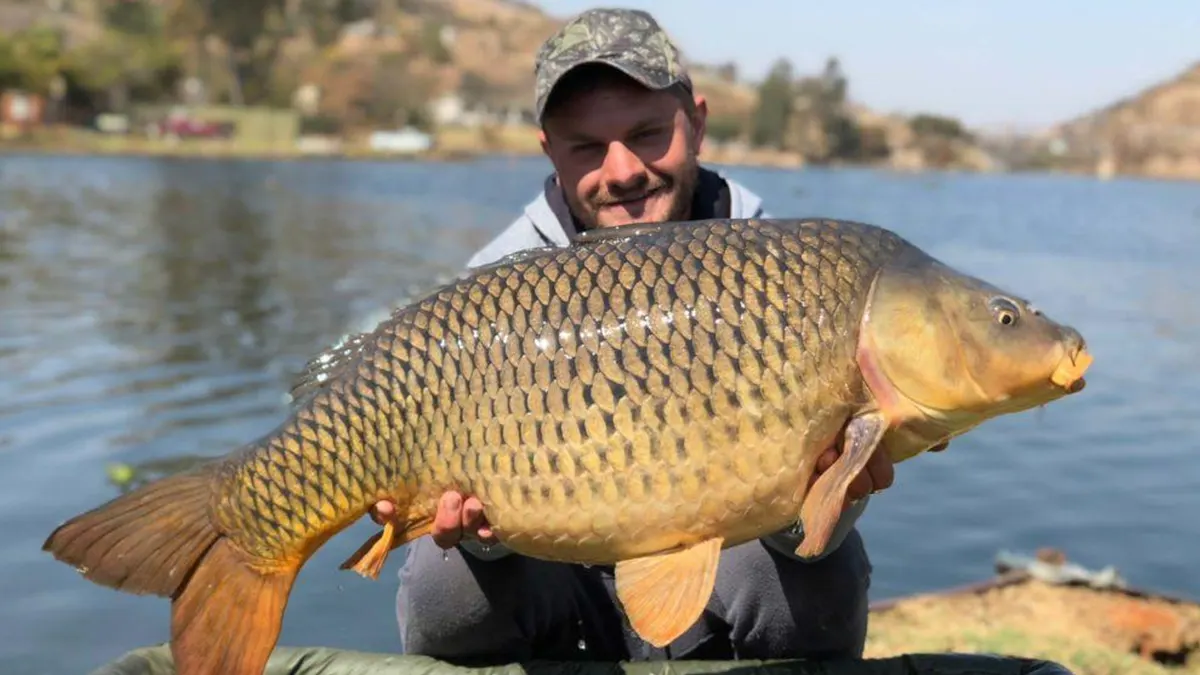
Scientific research raises important questions about the consumption of fish caught in Hartbeespoort Dam.
For generations, anglers have caught carp, barbel, kurper and other freshwater fish in Hartbeespoort Dam. While many practise catch-and-release fishing, others take their catches home for consumption.
However, scientific research suggests that residents should exercise caution before putting fish from the dam on the dinner table.
Although historical studies have found relatively low health risks from certain contaminants, other research has identified potentially harmful chemicals in fish tissue. These findings, together with the dam’s ongoing environmental challenges, raise legitimate public health concerns.
What makes Hartbeespoort Dam a concern?
Hartbeespoort Dam has long suffered from excessive nutrient enrichment, scientifically known as eutrophication.
The dam receives water from an extensive catchment area affected by urban development, sewage discharges, agricultural runoff and industrial activities.
High concentrations of nitrogen and phosphorus encourage the excessive growth of algae, cyanobacteria and invasive aquatic plants such as water hyacinth.
However, the visible green water and floating vegetation are only part of the problem. Chemical pollutants that are invisible to the naked eye may also accumulate in fish and other aquatic organisms.
What scientific studies have found
Several scientific investigations have examined the quality of fish caught in Hartbeespoort Dam, with findings that present a complicated picture.
A Water Research Commission report published in 2016 referred to an earlier assessment from 2012 that predicted low health risks associated with the consumption of fish from the dam, based on the contaminants and exposure assumptions considered at the time.
A study published in the scientific journal Chemosphere in 2015 investigated organochlorine pesticides in sharptooth catfish, commonly known as barbel, from three polluted South African dams.
Researchers detected pesticide residues in fish from Hartbeespoort Dam, including lindane and forms of hexachlorocyclohexane. However, the study did not estimate an unacceptable toxic risk from consuming Hartbeespoort catfish based on the pesticides investigated.
Further research, published in the African Journal of Aquatic Science in 2018, examined carp and barbel from polluted South African dams, including Hartbeespoort.
Researchers identified chemical contamination and abnormalities affecting fish health across the investigated dams. They also found elevated levels of a DDT-related compound in barbel from Hartbeespoort Dam.
Another investigation published in 2018 examined emerging pollutants, including pharmaceutical residues, in the Hartbeespoort catchment. Researchers identified the Jukskei River as a major contributor to the emerging contaminants investigated.
Importantly, these historical studies cannot be regarded as a guarantee that fish caught in the dam today are safe for human consumption.
The pharmaceutical study also offered a reassuring finding: the emerging pollutants investigated did not accumulate significantly in the muscle tissue of the carp and barbel sampled.
The hidden danger of blue-green algae
One of the most concerning environmental problems at Hartbeespoort Dam is the presence of cyanobacteria, commonly referred to as blue-green algae.
Certain species produce toxins known as microcystins, which can damage the liver and kidneys.
A 2019 scientific study confirmed the presence of microcystins in water samples collected from Hartbeespoort Dam and investigated their occurrence in surrounding water sources.
Fish exposed to harmful algal blooms may accumulate toxins through their food or contact with contaminated water.
According to the United States Centers for Disease Control and Prevention (CDC), consuming fish contaminated with cyanobacterial toxins can cause symptoms including nausea, vomiting, diarrhoea, headaches and, in severe cases, liver damage.
However, the presence of toxins in dam water does not automatically establish dangerous concentrations in every fish caught there. Laboratory testing of edible fish tissue is needed to determine the actual risk.
What about the dead fish found in Hartbeespoort Dam?
In April 2023, numerous dead fish were discovered near Ifafi and the Schoemansville waterfront.
An investigation by the Department of Water and Sanitation concluded that the fish deaths resulted from severely depleted oxygen levels associated with excessive algal growth and nutrient pollution.
The department explained that such conditions are characteristic of sewage-contaminated aquatic environments containing substantial amounts of organic material.
Although the incident highlighted the dam’s environmental problems, it did not establish that surviving fish were poisonous or unsafe for consumption.
Nevertheless, fish found dead or dying in the dam should never be collected for human consumption.
Can you tell whether a fish is contaminated?
Unfortunately, a fish that appears perfectly healthy may still contain potentially harmful contaminants.
Chemical substances can accumulate in the flesh, fatty tissue and internal organs of fish over time.
This process, known as bioaccumulation, means that some contaminants may build up in an organism even when concentrations in the surrounding water are relatively low.
The appearance, smell and taste of a fish cannot reliably establish whether it is safe to eat. Laboratory analysis is required to determine contamination levels.
Similarly, clear water does not necessarily mean clean water. The absence of visible algae or water hyacinth is not proof that the water is free from chemical pollution.
Does cooking the fish make it safe?
Many people believe that thoroughly cooking fish eliminates all health risks. Unfortunately, this is not the case.
While proper cooking can destroy many harmful bacteria and parasites, it cannot reliably remove chemical contaminants or algal toxins.
Frying, grilling, smoking or braaiing a contaminated fish will therefore not necessarily make it safe for human consumption.
Removing the skin, fat and internal organs may reduce exposure to certain contaminants, but it cannot eliminate chemicals or toxins already present in the edible flesh.
Who should be particularly cautious?
Certain groups may be especially vulnerable to contaminants found in polluted freshwater environments.
These include:
-
Pregnant women and breastfeeding mothers.
-
Babies and young children.
-
People with underlying liver or kidney conditions.
-
People who regularly consume fish caught from polluted water sources.
-
Households that depend on locally caught fish as a regular source of food.
Long-term exposure to certain pollutants may pose health risks even when a person does not experience immediate symptoms after eating contaminated fish.
Precautions for Hartbeespoort anglers
Until up-to-date laboratory results establish the safety of fish intended for human consumption, anglers should consider the following precautions:
-
Practise catch-and-release fishing where permitted.
-
Avoid eating fish caught during harmful algal blooms.
-
Never consume fish found dead, dying or behaving abnormally.
-
Avoid contact with thick green algal scum.
-
Wash hands and fishing equipment with clean water after fishing.
-
Do not feed potentially contaminated fish to dogs or cats.
-
Follow official environmental and public health advisories.
-
Seek medical attention if you become ill after consuming fish suspected of being contaminated.
Is it safe to eat fish from Hartbeespoort Dam?
The answer is not a straightforward yes or no.
Historical scientific studies have found that certain contaminants in sampled fish did not present unacceptable risks under the conditions investigated. Other research has identified potentially concerning pollutants and evidence of poor fish health.
However, no recent, comprehensive fish-consumption assessment or current dam-specific consumption advisory could be verified for this article.
Without such information, it would be irresponsible to declare all fish caught in Hartbeespoort Dam safe for human consumption. Equally, the available evidence does not justify claiming that every fish in the dam is poisonous.
The safest precaution is to avoid consuming fish caught in Hartbeespoort Dam until updated testing and public health guidance are available.
For recreational anglers, the dam can continue to offer fishing enjoyment where access is permitted and environmental conditions allow, but keeping the photograph rather than the fish may be the wiser choice.
The situation also raises an important question for the Department of Water and Sanitation, Magalies Water and environmental health authorities: should regular testing of fish intended for human consumption form part of the dam’s rehabilitation programme?
For a community that has lived alongside Hartbeespoort Dam for more than a century, knowing whether its fish are safe to eat should not be a matter of guesswork.