
Questions have emerged over the future of invasive aquatic weed removal at Hartbeespoort Dam after a longer-term tender was cancelled and an emergency contract worth approximately R4.38 million was awarded for just 51 days of clearing operations.
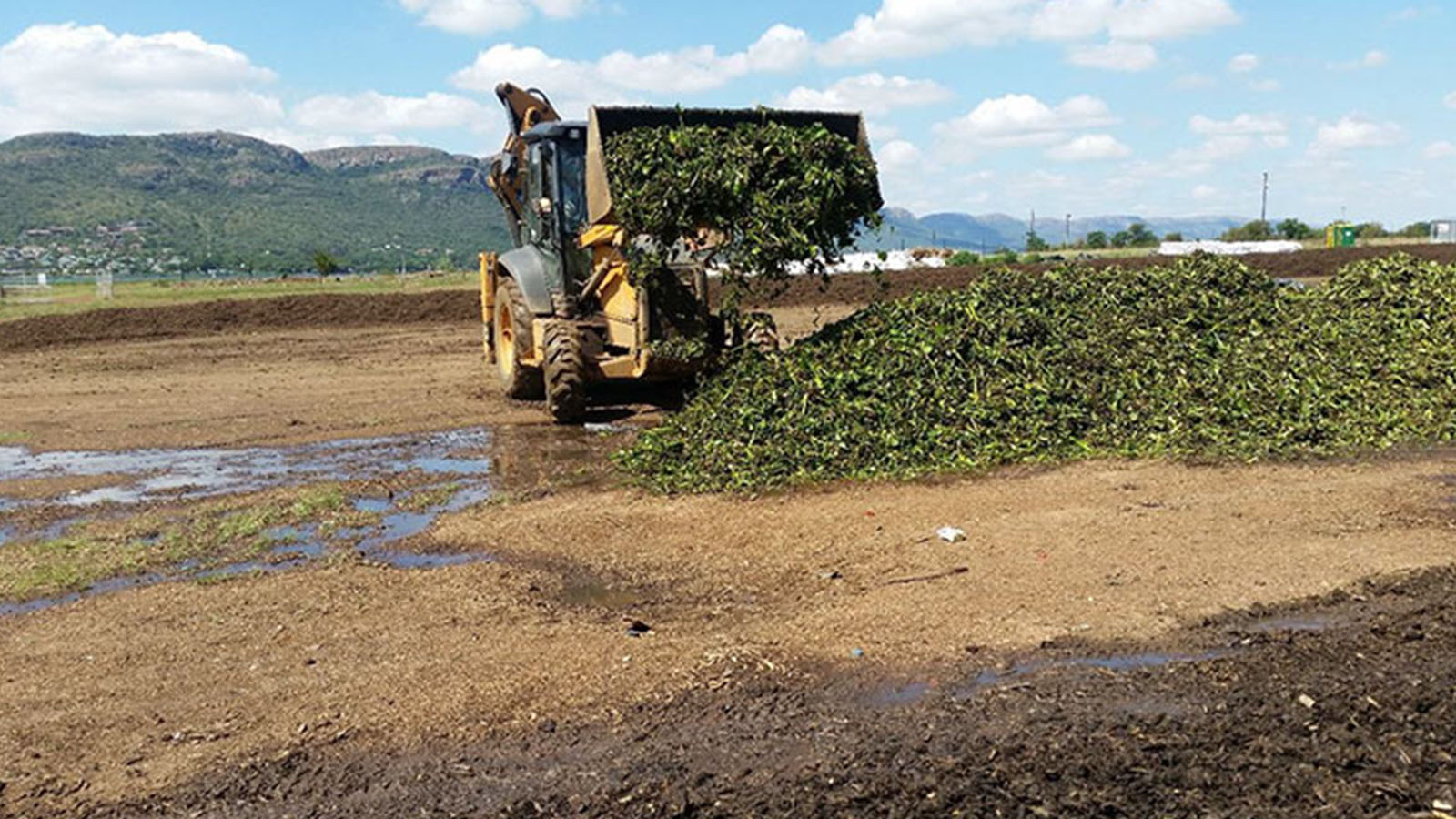
The contract, awarded to Hya-Matla Organics by Magalies Water, covers the manual and mechanical removal of water hyacinth and salvinia from the dam.
According to a report on the procurement process, the original longer-term tender was cancelled after the bids received were deemed non-responsive.
However, as of 20 November 2026, no replacement long-term tender had reportedly been publicly advertised, raising concerns about continuity in the fight against invasive aquatic plants.
R4.38 million for 51 days
The emergency contract, valued at approximately R4.38 million, provides for a relatively short period of weed-clearing operations.
Spread across 51 days, the contract represents an average expenditure of approximately R85,900 per day.
This figure is a mathematical average of the total contract value and does not necessarily reflect the contractor’s actual daily payments, operating costs or profit.
The central question is whether a short-term intervention can deliver sustainable results against an invasive plant problem that has plagued Hartbeespoort Dam for decades.
Water hyacinth and salvinia are both fast-growing floating aquatic plants capable of spreading rapidly under favourable environmental conditions.
Without sustained management, areas cleared of vegetation can become reinfested.
Why was the original tender cancelled?
According to the report, Magalies Water cancelled its longer-term tender because the bids submitted did not meet the required responsiveness criteria.
In public procurement, a non-responsive bid generally refers to a submission that fails to satisfy mandatory tender requirements.
However, the cancellation raises several questions about the procurement process, including whether the tender specifications were appropriate, how many companies submitted bids and what steps are being taken to secure a longer-term contractor.
The cancellation does not, in itself, indicate wrongdoing. Nevertheless, the subsequent award of an emergency contract worth millions of rand makes transparency particularly important.
What happens after the emergency contract expires?
Perhaps the most pressing concern is what will happen when the 51-day contract ends.
If a replacement tender is not finalised in time, there is a risk that clearing operations could be interrupted.
Such interruptions could undermine progress made during the emergency intervention, particularly during the warmer summer months when invasive aquatic plants can proliferate rapidly.
For residents, tourism operators, boat owners and businesses dependent on Hartbeespoort Dam, consistent weed management is essential.
Large accumulations of floating vegetation can obstruct boating routes, interfere with recreational activities and negatively affect the dam’s appearance and tourism appeal.
A problem that requires more than emergency intervention
The battle against water hyacinth at Hartbeespoort Dam has involved various approaches over the years, including mechanical harvesting, manual removal and biological control.
Salvinia has added another dimension to the challenge.
While physical removal can provide immediate relief in heavily infested areas, specialists generally regard integrated management as essential for lasting results.
This includes biological control, monitoring, targeted physical removal and measures to address the nutrient pollution that contributes to excessive aquatic plant growth.
Hartbeespoort Dam receives nutrient-rich inflows from its catchment, including water affected by wastewater and other pollution sources.
Unless these underlying conditions are addressed, invasive aquatic plants are likely to remain a recurring management challenge.
Original tender aimed to remove 3,300 tonnes
The original tender, reference RFB/MW/SS-08/2026-27/01, closed on 22 September 2026 and was intended to cover a three-month programme.
Its scope included removing approximately 3,300 tonnes of floating vegetation, transporting and disposing of the material, maintaining containment barriers and monitoring weed coverage.
The programme also set targets for limiting invasive plant coverage to below 10% of the dam’s surface during winter and 20% during summer.
The emergency appointment was recorded on 26 October 2026 under procurement reference Ex Post Facto – MW Deviation 8 (FY 2026-27), with an exact award value of R4,377,337.
It remains unclear when the 51-day operational period began and how much vegetation has been removed under the contract.
Questions Magalies Water needs to answer
For Hartbeespoort residents and businesses, several important questions remain:
-
Why were the bids for the original three-month tender declared non-responsive?
-
What circumstances justified the emergency direct appointment of Hya-Matla Organics?
-
When did the 51-day clearing period begin, and when will it end?
-
How many tonnes of hyacinth and salvinia have been removed, and from which areas?
-
What arrangements are in place to maintain containment barriers and prevent reinfestation?
-
When will a replacement longer-term tender be advertised?
The community needs certainty
With the summer growing season under way, uncertainty about the continuation of weed-clearing operations is a concern for everyone who depends on Hartbeespoort Dam.
The issue is not simply how much money is being spent, but whether the expenditure will produce measurable and lasting improvements.
The emergency appointment may provide much-needed short-term relief, but it cannot substitute for a clearly communicated, properly funded and sustainable management programme.
For Hartbeespoort, the most important question remains: What happens on day 52?
This report is based on publicly available procurement information and reporting published on 20 November 2026. The available records do not establish procurement irregularities or wrongdoing by Magalies Water or Hya-Matla Organics. The questions raised concern transparency, performance and continuity of weed management.