
From the legacy of a Boer general to a picturesque village named after a wildflower, the names of Hartbeespoort’s five historic suburbs tell the story of how a farming valley became one of South Africa’s best-known holiday destinations.
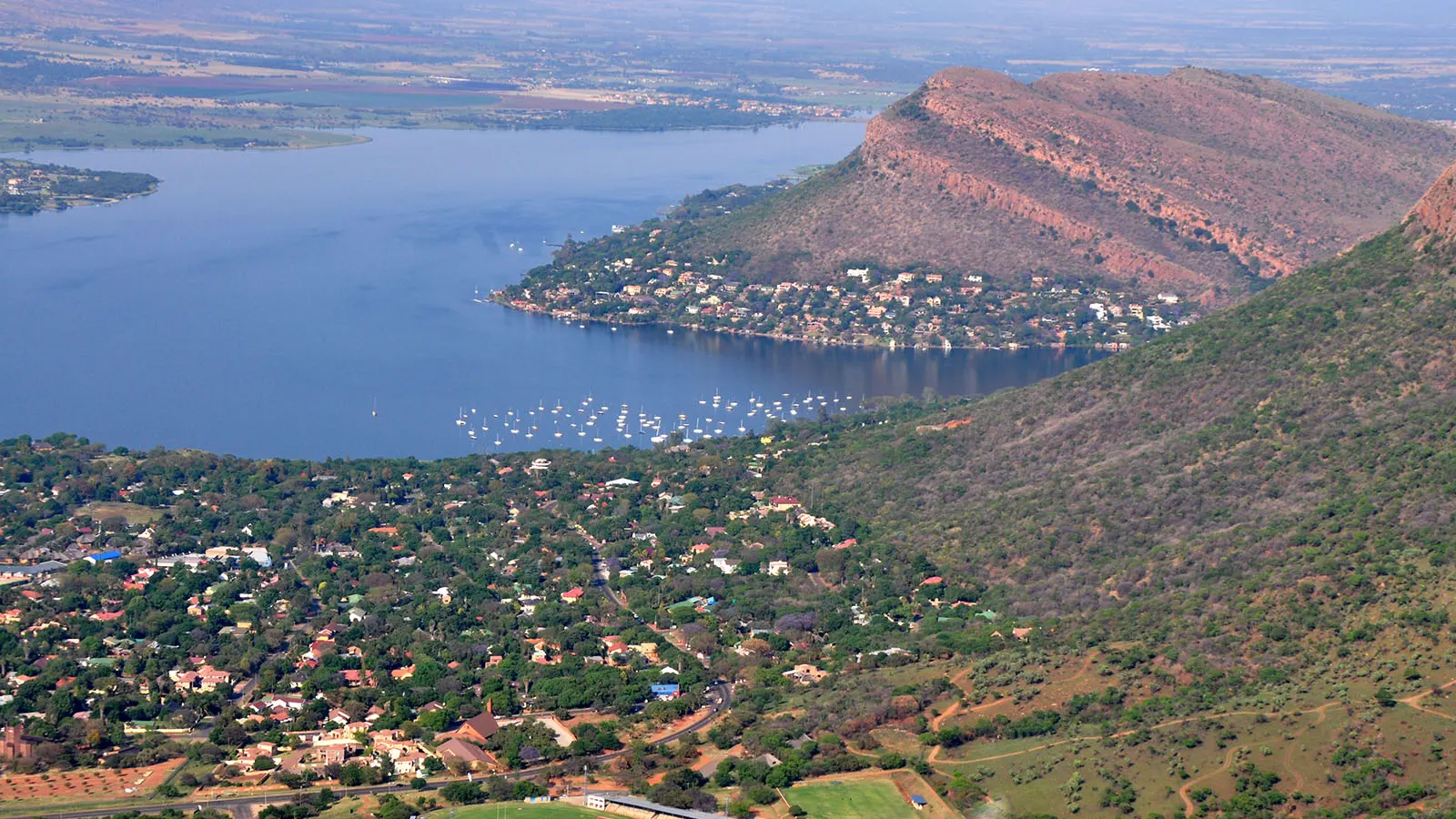
The suburbs surrounding Hartbeespoort Dam have histories dating back to the town’s early development.
Today, Schoemansville, Kosmos, Meerhof, Ifafi and Melodie are familiar names to everyone living in Hartbeespoort. But how many residents know where these names originated, who established the suburbs, and how they became part of the town we know today?
The history of these neighbourhoods is closely connected to the construction of Hartbeespoort Dam, the Schoeman family and the transformation of the surrounding countryside during the early 20th century.
Although the area had been inhabited for centuries before European settlement, the development of modern Hartbeespoort began to accelerate when the dam was constructed in the 1920s.
One man in particular, Johan Schoeman, played a remarkable role in establishing the first residential settlements around the new dam.
Schoemansville – named after a Boer general
Schoemansville, the oldest established residential township in Hartbeespoort, owes its name to General Hendrik Schoeman, a prominent and sometimes controversial figure in the history of the South African Republic.
Schoeman owned land in the valley where Hartbeespoort Dam would eventually be built. Long before the present dam existed, he recognised the potential of the Crocodile River for irrigation and agricultural development.
In 1898, he constructed a small dam, known as Sophia Dam, named after his wife. Unfortunately, the structure was destroyed by flooding.
His son, Johan Schoeman, inherited his father’s vision for developing the area.
On 22 April 1922, Johan applied for permission to establish a township near the proposed dam. He reportedly wanted to name it Hendrik Schoeman in honour of his father, but the name was not approved by the Surveyor-General.
Instead, the township became known as Schoemansville.
The establishment of Schoemansville coincided with the construction of Hartbeespoort Dam, and the settlement soon became an important commercial and residential centre.
Today, Schoemansville remains one of the historic hearts of Hartbeespoort, with its established residential streets, businesses and community facilities.
The name is a lasting reminder of the family whose land and ambitions helped shape the town.
Kosmos – the village named after a flower
Few suburbs in South Africa enjoy a setting quite like Kosmos.
Nestled between the steep slopes of the Magaliesberg and the northern shoreline of Hartbeespoort Dam, the village has long been associated with holiday homes, artists and spectacular views across the water.
The name Kosmos is generally believed to have been inspired by the colourful cosmos flowers that grow abundantly across parts of the South African Highveld.
These pink, white and purple flowers, originally introduced from the Americas, became a familiar sight along country roads and disturbed ground.
The village was among the early residential developments promoted by Johan Schoeman after the construction of the dam.
Although some houses appeared during the 1920s, Kosmos developed into a particularly desirable residential and holiday destination during the 1930s.
Its secluded position and direct access to the water made it attractive to affluent residents from Pretoria and Johannesburg.
An academic account of the area’s development records that stands in Kosmos were selling for approximately £200 during the 1930s, compared with around £60 in Schoemansville and £70 in Meerhof.
Kosmos also developed a reputation as a retreat for artists, writers and other creative people.
More than a century after the dam’s construction, the village still retains much of its distinctive character, with winding roads, steep properties and houses overlooking the water.
Meerhof – a lakeside settlement with farming roots
Meerhof is another of Hartbeespoort’s original settlements associated with Johan Schoeman.
The name has an unmistakably Dutch-Afrikaans character. Meer means lake, while hof can refer to a courtyard, garden or enclosed property.
The name is therefore suggestive of a lakeside homestead or garden, although the precise historical reason for its selection has not been conclusively established in the sources consulted.
Meerhof’s history is closely connected to farming, transport and the earliest days of tourism at Hartbeespoort Dam.
In 1921, Johan Schoeman established orchards and cultivated fields on his remaining land at Meerhof, where he also built a house against the mountain.
As Hartbeespoort became increasingly popular with visitors, Meerhof developed into an important arrival point.
Tourists travelling by train could disembark at the railway siding once known as Schoemansville Halt, later associated with Meerhof.
Johan Schoeman operated a café where visitors could enjoy refreshments before continuing their journey to the dam.
He also established the Agnes Hotel, named after his wife, and operated passenger boats that transported holidaymakers across the water.
The Meerhof settlement consequently became part of the infrastructure supporting Hartbeespoort’s emerging tourism industry.
Today, Meerhof is an established residential suburb, but its early role as a farming settlement and gateway for visitors remains an important chapter in local history.
Ifafi – a name with an intriguing history

Of Hartbeespoort’s five traditional suburbs, Ifafi arguably has one of the most unusual names.
Unlike Schoemansville, which clearly commemorates a family, or Kosmos, which is associated with a flower, the exact origin and meaning of Ifafi are less clearly documented in readily available historical sources.
What is known is that the suburb developed on land associated with the Schoeman family’s property interests.
Historical research into the development of Hartbeespoort identifies Lincoln Schoeman, a son of Johan Schoeman, as the developer of the Ifafi township.
The name also has an older geographical association: official provincial records identify a farm named Ifafi 457 JQ in the area.
This establishes that Ifafi was not simply a modern marketing name invented for a residential development. It was also recorded as a farm name.
However, the linguistic origin of the word, and whether it derives from an earlier local name, a personal name or another source, requires further historical investigation.
Over the decades, Ifafi developed into one of Hartbeespoort’s established residential neighbourhoods, with schools, homes and businesses.
Its name remains one of the interesting unanswered questions in the town’s history.
Melodie – a musical name in a historic landscape
In Afrikaans, melodie means melody or tune.
It is tempting to imagine that the name was selected to reflect the peaceful surroundings and natural beauty of the Magaliesberg foothills.
However, while the meaning of the word is clear, the precise circumstances in which the township received its name have not been verified.
Melodie has a fascinating history that predates the establishment of the modern suburb.
A cultural heritage assessment of the area records that elements of the British military garrisons guarding Silkaatsnek and Kommandonek during the Anglo-Boer War were positioned in the area where Melodie is situated today.
This places the suburb within the broader historical landscape of the military campaigns fought around the Magaliesberg in 1900.
By 1986, Melodie was already officially recognised as a township in provincial government records.
The area subsequently developed into an important residential and commercial part of Hartbeespoort.
Today, Melodie is associated with a mixture of established properties, newer residential developments and commercial activity.
Although the story behind its name still needs further documentary confirmation, its place in Hartbeespoort’s history is beyond doubt.
One dam, five suburbs and a shared history
The development of Hartbeespoort’s suburbs cannot be separated from the construction of the dam.
Before the dam was built, the valley was largely agricultural, with farms, scattered homesteads and transport routes connecting Pretoria with settlements to the west.
The completion of the dam in the early 1920s changed the landscape dramatically.
Farmland disappeared beneath the rising water, new opportunities emerged along the shoreline, and the area began attracting visitors from Pretoria and Johannesburg.
Johan Schoeman recognised the recreational possibilities of the new lake and played a central role in promoting residential development and tourism.
Schoemansville became an early commercial centre, Meerhof served farming and transport activities, and Kosmos developed into a sought-after holiday village.
Ifafi and Melodie subsequently became part of the expanding residential landscape.
Over time, the five settlements grew together, becoming the core of what residents and visitors now collectively call Hartbeespoort.
Their histories also reflect a much broader story, involving earlier communities, farming families, the Anglo-Boer War, the building of the dam and the growth of tourism.
More than just names on a map
Today, many people drive through Schoemansville, Kosmos, Meerhof, Ifafi and Melodie without giving their names a second thought.
Yet each represents a different chapter in the development of Hartbeespoort.
Schoemansville commemorates a family that helped shape the town. Kosmos recalls the wildflowers associated with the countryside. Meerhof reflects the lakeside character of the settlement, while Ifafi and Melodie preserve names whose full origins deserve further investigation.
Together, these suburbs form the historic foundation of modern Hartbeespoort.
And as the town continues to expand, their names remain a reminder that the history of Hartbeespoort is not only written in the dam wall, the mountains and the old buildings, but also in the places residents call home.
Kormorant invites long-time Hartbeespoort residents and descendants of the area’s pioneering families to share old photographs, documents and recollections that could shed more light on the origins of these suburbs.