The start of the war
The Second Anglo-Boer War – also called the South African War (1899–1902): Fought from October 11, 1899, to May 31, 1902, between the British Empire and the two independent Boer republics—the South African Republic (Transvaal) and the Orange Free State.
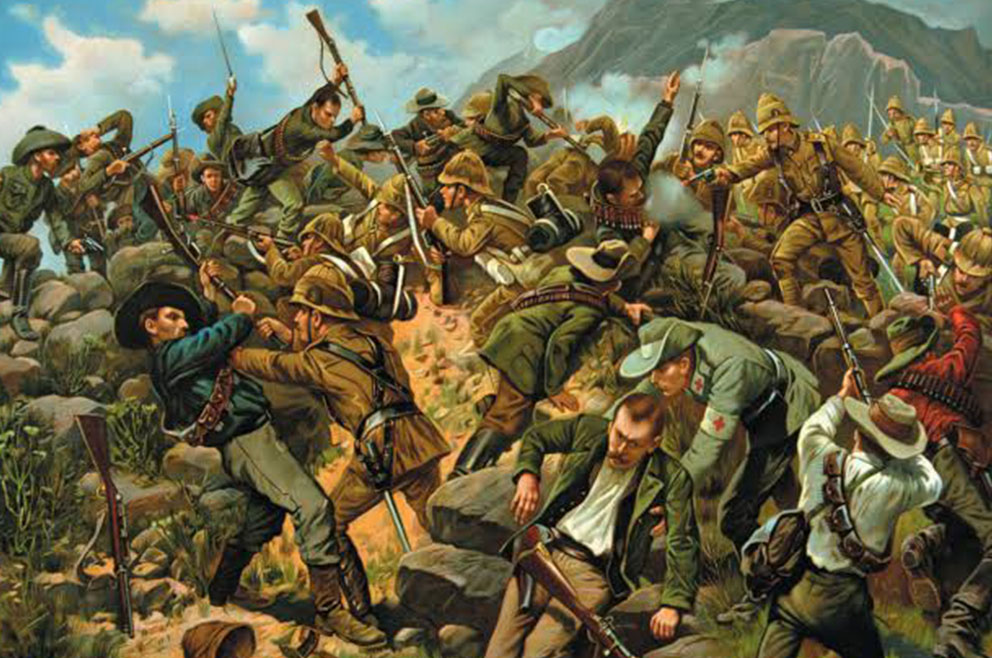
The Anglo-Boer War (1899–1902) had a major impact on the Magaliesberg area, which became an important military zone because of its strategic mountain passes, valleys and routes between Pretoria and the western Transvaal.
After the war began in October 1899, Boer forces under commanders such as General Koos de la Rey operated in and around the Magaliesberg. The mountains provided excellent cover and observation points, allowing the Boers to move between farms and valleys while avoiding larger British forces.
One of the most important actions in the region was the Battle of Nooitgedacht, fought on 13 December 1900. Boer commandos under De la Rey and General Christiaan Beyers attacked a British force occupying positions near the Magaliesberg. The Boers achieved a significant victory, capturing supplies and weapons and inflicting heavy casualties on the British.
The area remained contested during 1901 and 1902 as the British adopted a more aggressive counter-guerrilla strategy. Blockhouses, barbed-wire fences and mounted patrols were established to restrict Boer movement. Farms in the region were also affected by the British scorched-earth policy, with livestock and crops destroyed and many families removed to concentration camps.
The war ended with the Treaty of Vereeniging on 31 May 1902. The Magaliesberg had played an important role because its rugged terrain made it particularly valuable to Boer commandos conducting guerrilla warfare.
In short: the Magaliesberg was not just a backdrop to the war—it was a strategic Boer stronghold and the scene of important fighting, particularly the Battle of Nooitgedacht.