Why are there so many aircraft flying over Hartbeespoort?
From passenger jets and private aircraft to helicopters and microlights, the skies above Hartbeespoort are often buzzing with aviation activity. But why is this picturesque town such a popular route for aircraft?
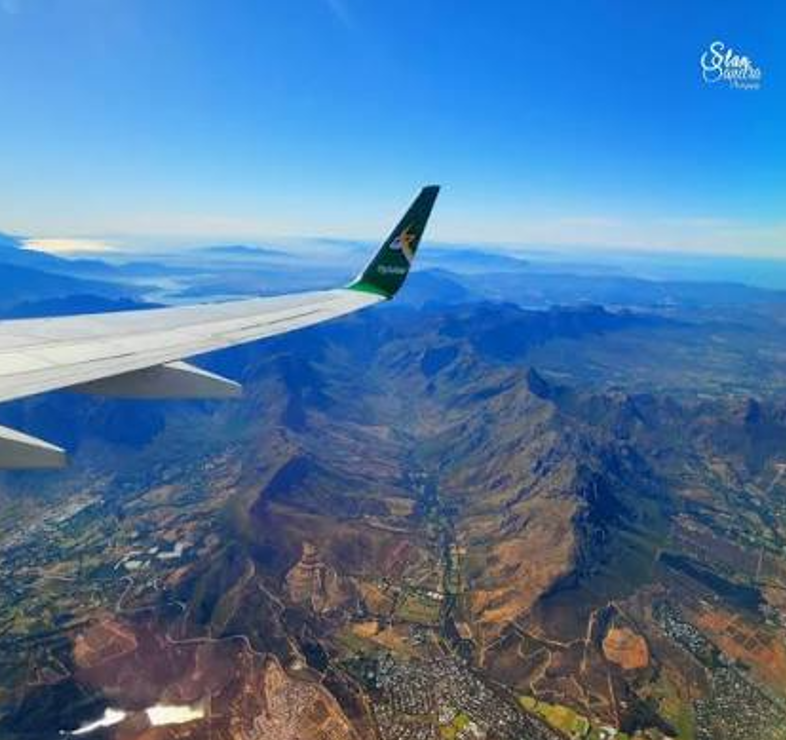
Residents of Hartbeespoort are accustomed to the sound of aircraft overhead. On some days, it seems that hardly a few minutes pass without an aeroplane, helicopter or light aircraft crossing the skies above the dam.
For many residents, the constant aviation activity raises questions. Why do so many aircraft fly over Hartbeespoort? Where are they going? And why do some appear to circle the dam or follow similar routes across the Magaliesberg?
The answer lies largely in Hartbeespoort’s geographical position, its proximity to major airports and its popularity among recreational pilots.
Lanseria International Airport plays a major role
One of the biggest contributors to aviation activity around Hartbeespoort is Lanseria International Airport, situated southeast of the dam.
Lanseria accommodates scheduled passenger flights, business jets, charter operations and general aviation.
Depending on weather conditions, runway operations and instructions from air traffic controllers, aircraft arriving at or departing from Lanseria may pass over or close to Hartbeespoort.
Some aircraft are particularly noticeable because of their size, altitude and engine noise.
Although residents may observe aircraft following similar routes, flight paths can change depending on operational requirements.
Hartbeespoort is a landmark for pilots
Hartbeespoort Dam is one of the most recognisable geographical features in the region.
Surrounded by the Magaliesberg and Witwatersberg mountain ranges, the dam provides an easily identifiable reference point for pilots navigating visually.
For pilots flying under visual flight rules (VFR), prominent landmarks such as dams, mountains, roads and towns are useful navigation aids.
This makes Hartbeespoort a natural reference point for pilots travelling between Gauteng, North West and destinations farther afield.
Flight training adds to the traffic
The greater Johannesburg and Pretoria region is home to numerous flying schools and aviation training facilities.
Student pilots regularly undertake navigation exercises, cross-country flights and other training activities.
The Hartbeespoort region offers recognisable landmarks and access to airspace used by general aviation.
Residents may therefore notice smaller aircraft following similar routes or making repeated manoeuvres.
However, not every aircraft circling the dam is necessarily involved in flight training. Some may be sightseeing, conducting aerial work or operating for other purposes.
Private aircraft and recreational flying
Hartbeespoort has long been popular among private pilots and aviation enthusiasts.
The combination of spectacular mountain scenery, the dam and nearby airfields makes the area attractive for recreational flying.
The Coves, a residential aviation estate on the western side of Hartbeespoort Dam, has its own private runway and aviation facilities.
Aircraft operating from the estate contribute to local aviation activity.
Other pilots visit the region to enjoy scenic flights over the dam and surrounding countryside.
On weekends and public holidays, recreational flying can be particularly noticeable when weather conditions are favourable.
Helicopters, microlights and sightseeing flights
Fixed-wing aircraft are not the only visitors to Hartbeespoort’s skies.
Helicopters are frequently associated with private transport, sightseeing, aerial photography and other commercial operations.
The dam and surrounding mountains also attract microlight pilots, paragliders and hang-gliding enthusiasts.
The mountainous terrain provides opportunities for recreational aviation, although these activities operate under different rules and airspace restrictions.
Why do aircraft sometimes fly so low?
One of the most common concerns among residents is the apparent low altitude of aircraft passing over residential areas.
Several factors can influence how low an aircraft appears to be flying.
Hartbeespoort’s mountainous terrain can make an aircraft appear closer than it actually is. Aircraft flying over valleys or near elevated terrain may seem unusually low when viewed from homes situated on hillsides.
Aircraft approaching or departing nearby airfields may also operate at lower altitudes than aircraft cruising between major cities.
Nevertheless, pilots are required to comply with applicable aviation regulations, including minimum-height requirements, unless an authorised exception applies.
Residents concerned about consistently low-flying aircraft can record the date, time, location and aircraft registration, where visible, for referral to the appropriate aviation authorities.
Is the number of aircraft increasing?
While some Hartbeespoort residents may feel that aviation activity has increased, establishing whether there has been a significant rise requires historical aircraft movement data.
Changes in airline schedules, flight training activity, recreational flying and weather conditions can all influence how busy the skies appear on a particular day.
Wind direction can also affect runway selection at nearby airports, potentially changing the routes aircraft follow.
Consequently, residents may experience more aircraft noise on certain days without there necessarily being a permanent increase in regional air traffic.
How can residents identify aircraft overhead?
Technology has made it easier than ever to identify aircraft flying above Hartbeespoort.
Flight-tracking services such as Flightradar24 and ADS-B Exchange allow users to view many aircraft movements on interactive maps.
Depending on the aircraft and the information available, these services may display its registration, aircraft type, altitude, route and destination.
However, not all aircraft appear on public tracking platforms, particularly some smaller recreational aircraft and certain government or military flights.
Hartbeespoort – a busy crossroads in the sky
Hartbeespoort’s location between major urban centres, its proximity to Lanseria International Airport and its established recreational aviation community all contribute to the number of aircraft passing overhead.
For aviation enthusiasts, the skies above the dam offer an opportunity to observe everything from small training aircraft to commercial passenger jets.
For residents concerned about aircraft noise and low-flying aeroplanes, understanding the reasons behind the activity is an important first step.
One thing is certain: Hartbeespoort is not only a popular destination for tourists on the ground. It is also a prominent landmark for those travelling through the skies.
HAVE YOUR SAY
Have you noticed an increase in aircraft flying over Hartbeespoort?
Kormorant would like to hear from residents about aviation activity in their neighbourhoods.
Are aircraft flying lower than before? Have flight patterns changed? Or do you simply enjoy watching the variety of aircraft passing over the dam?
Share your observations with Kormorant. deon@kormorant.co.za