Legendary scientist, conservationist dies
Conservation organisations have expressed their sadness at the loss of a true pioneer in wildlife conservation, Dr Paul Bartels who died on 9 July. Bartels, who lived in Skeerpoort was 69 years old.
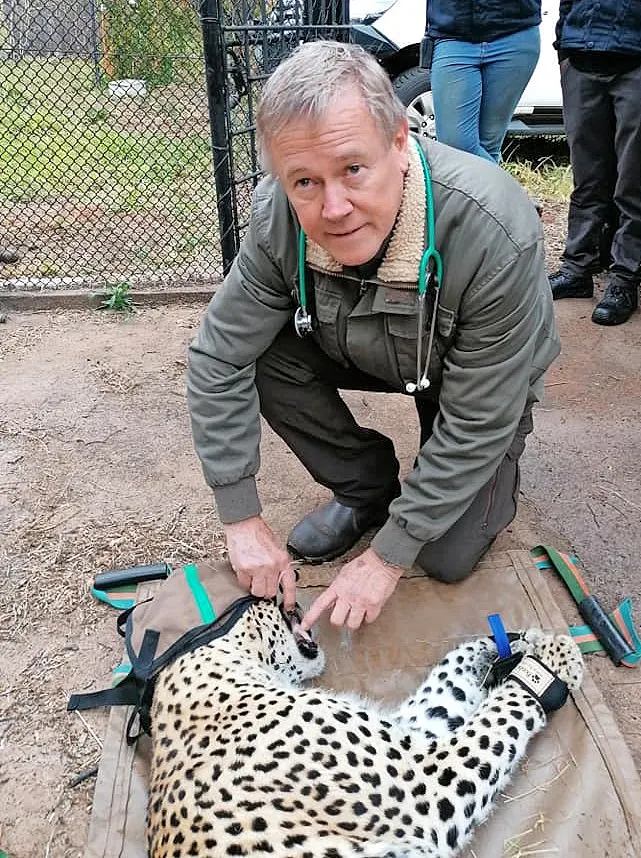
Dr Paul Bartels
“The Endangered Wildlife Trust (EWT) is saddened by the sudden passing of a former colleague and a leader in the use of assisted reproductive technology for wildlife conservation, Dr Paul Bartels.
Paul was a pioneer in this cutting-edge field which merges science and conservation by aiming to futureproof the genetic composition of captive and wild gene pools when wildlife populations may not be able to do this naturally,” EWT said in a media release.
Paul’s vision led to the establishment of the first wildlife biobank in Africa. The Wildlife Biological Resource Centre (wBRC), was established in 1996 as a working group within the EWT. The wBRC was dedicated to the collection, processing, banking, use, and distribution of wildlife biomaterials for biodiversity conservation and biotechnology development. In 1998, the wBRC made global history with the birth of the world’s first artificially inseminated wildlife baby, an eland female called Graca, after South Africa’s then First Lady. Graca was conceived via artificial insemination using the sperm that had been collected post-mortem from an eland bull that had died four hours prior to semen collection. The semen was then frozen and used over a year later to inseminate an eland cow at the Johannesburg Zoo. Graca made history, by showing the world that the genetics from wild species can still play a role in maintaining genetic diversity, even after the donor animal has died before collection.
Paul’s work was considered of strategic importance, resulting in the wBRC moving from the Endangered Wildlife Trust to the National Zoological Gardens under the National Research Foundation, and later became the National Wildlife Biobank under the South African National Biodiversity Institute (SANBI).
He used his 25 years’ experience in wildlife tissue banking to found a company to produce meat in a laboratory that would contribute to food security. As an avid entrepreneur, he also founded WildBio Co, which uses cutting edge scientific research and innovation to produce cell-lines for wildlife conservation, food security and novel product development; and later CryoWild, a non-profit organisation. WildBio developed the world’s largest African species biobank for accelerating the development of the biomedical, foodtech and biotech industries.
Paul also served as a lecturer in wildlife management at Tshwane University of Technology and was recently appointed as a Research Fellow at Stellenbosch University’s Department of Animal Science, where he led cutting-edge work in Cellular Agriculture Biobanking.
Additionally, he initiated the Save Magaliesberg Species Project in partnership with the Wildlife and Environment Society of SA (WESSA), and volunteers and students of the Tshwane University of Technology’s Department of Nature Conservation.
“Paul worked for the Endangered Wildlife Trust for more than a decade, and we are deeply saddened by the loss of this visionary leader in biotech and wildlife conservation. We are, however, eternally grateful for the legacy he leaves in the form of cutting-edge science, dozens of empowered and highly trained scientists, an African wildlife biobank and leading science that can be used to save wildlife, support ethically and sustainably food security and secure the genetic diversity and future of dozens of threatened Africa wildlife species.”
A memorial service for Bartels was held at the Nyoka Ridge Vulture Restaurant last weekend.