Watch out for your cycads – the Leopard moth is back
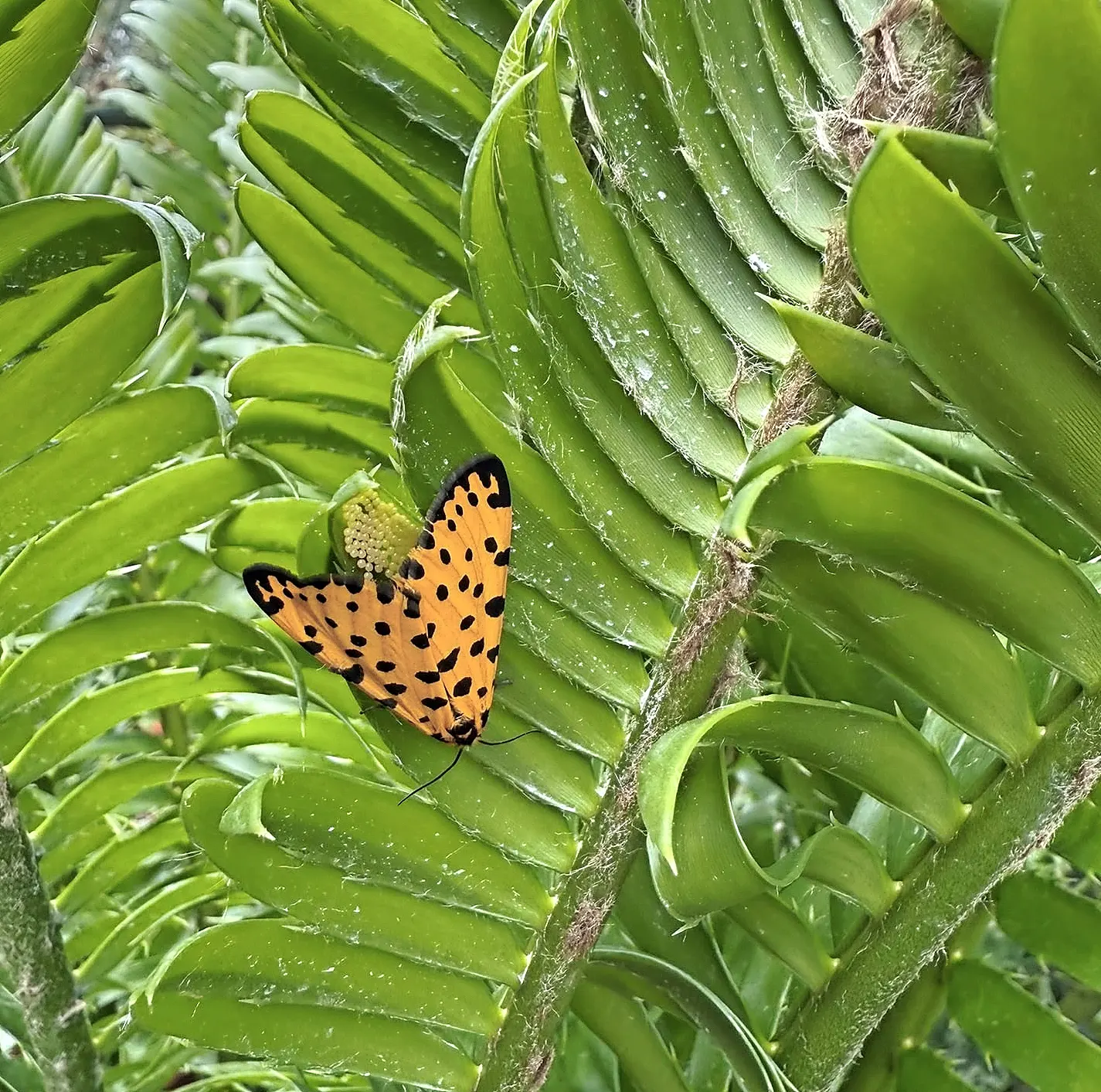
Last year Hartbeespoort had devastating damage from Leopard moths that target all cycads. They are around again!
“These moths lay eggs on young, soft new leaves. The worms devour the leaves. Unfortunately the only effective remedy seems to be systemic insecticide paired with a wetting agent,” said Andy de Wet of The Aloe Farm.
The pretty Leopard Magpie Moth (Zeronopsis leopardina) boasts black wings with bold yellow markings resembling a leopard’s pattern, reaching up to 5cm long.
This moth is a notorious pest for cycad enthusiasts in South Africa. They feed gregariously on cycad leaves, stripping them bare in groups.
The caterpillars spread easily, infecting new cycads.
Their voracious appetite can defoliate and kill cycads, including endangered species. It also reduces reproduction of cycads.
Here are some steps to combat them:
• Monitor your cycads regularly. Look for signs of the moth, such as eggs on new growth and caterpillars feeding on the leaves.
• Hand-picking: Early detection is key! Remove smaller caterpillars by hand when they’re easier to find.
• Natural control methods:
Insecticidal soap spray: Effective on younger caterpillars, but repeat applications might be needed.
• Use insecticide products containing cypermethrin or similar synthetic pyrethrum.
• Encourage natural predators like birds and beneficial insects that can help control the moth population. Beneficial insects like lacewings enjoy a caterpillar snack.
• Keep your cycads healthy and well-maintained, as healthy plants are more resistant to pests.
Physical barriers: Wrap mesh netting around cycads to prevent egg-laying and caterpillar access.
Chemical control
As a last resort, insecticides will have to be used to save your cycads. Use selective options registered for cycads and follow label instructions meticulously. Remember the risks: Insecticides can harm beneficial insects and pollute the environment. Use them only as a last resort and with caution.