An unusual ring of light around the sun has provided a spectacular sight in the skies over the Hartbeespoort region. But what causes this remarkable natural phenomenon, and does it mean a change in the weather?
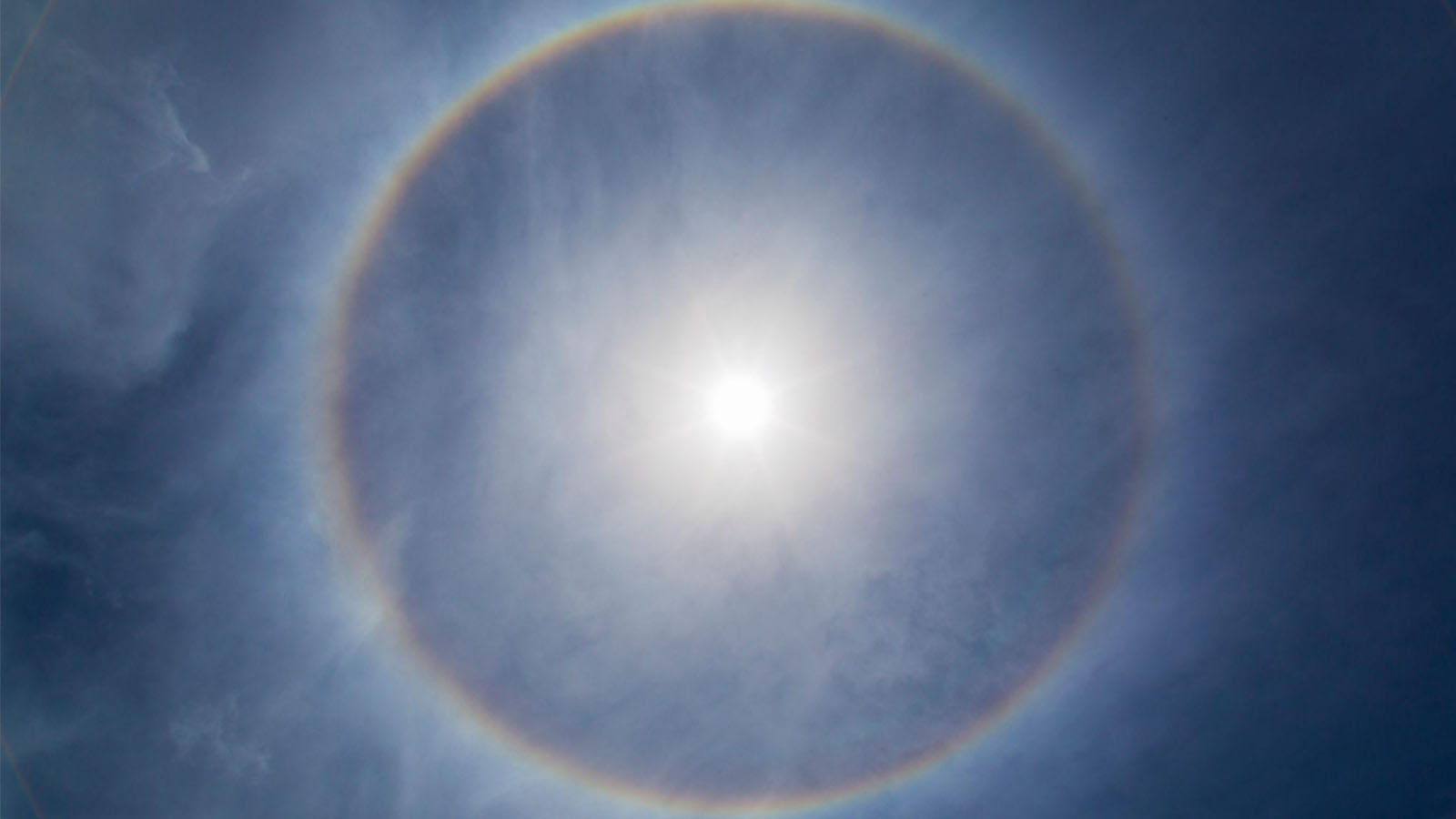
A remarkable atmospheric phenomenon, known as a sun halo, has attracted attention in the skies over the Hartbeespoort region.
The spectacular sight occurs when a large, almost perfectly circular ring appears around the sun, sometimes displaying faint rainbow-like colours.
A solar halo was also photographed in Pretoria on Monday morning, 16 November, at approximately 11:15, according to a social media report. The exact timing and extent of the phenomenon over Hartbeespoort have not yet been independently confirmed.
Although the phenomenon may appear mysterious, scientists explain that it is a natural optical effect caused by sunlight interacting with tiny ice crystals high in the Earth’s atmosphere.
What causes a sun halo?
According to meteorological experts, the phenomenon occurs when sunlight passes through thin, high-altitude clouds known as cirrus or cirrostratus clouds.
These clouds contain millions of microscopic ice crystals, generally located several kilometres above the Earth’s surface, where temperatures are well below freezing.
The ice crystals act like tiny prisms, bending and separating sunlight as it passes through them.
This process, known as refraction, creates the circular ring of light surrounding the sun.
The most common type is called a 22-degree halo, because the ring appears approximately 22 degrees away from the sun.
Depending on atmospheric conditions, the halo may appear as a bright white circle or display subtle colours, with reddish shades along its inner edge and bluish tones towards the outside.
The phenomenon is explained by the UK’s Met Office and the Royal Meteorological Society as a well-understood atmospheric optical effect.
Does it mean rain is coming?
For generations, people have associated rings around the sun or moon with approaching rain.
There is some scientific basis for this belief.
The high-altitude clouds responsible for sun halos can develop ahead of approaching weather fronts, sometimes indicating that changing weather conditions are on the way.
However, the appearance of a halo does not necessarily mean rain or thunderstorms are imminent.
A halo can form whenever suitable ice crystals are present in the atmosphere, even when the weather at ground level is warm and sunny.
For Hartbeespoort residents, the sight should therefore not be interpreted as a definite warning of approaching storms.
Is a sun halo rare?
Sun halos are not exceptionally rare, but a clearly visible, complete circle can be an impressive sight.
Their appearance depends on the presence of suitable ice crystals, the position of the sun and the visibility of high-altitude clouds.
South Africa has experienced similar displays in the past.
In November 2010, a spectacular halo was reported across Gauteng, Limpopo, Mpumalanga and parts of North West.
The phenomenon attracted considerable public attention, with residents sharing photographs and contacting weather experts for explanations.
At the time, meteorologists attributed the display to ice crystals in high-altitude clouds associated with atmospheric conditions over southern Africa.
Is it dangerous?
The halo itself is completely harmless.
However, residents should avoid looking directly at the sun while attempting to observe or photograph the phenomenon.
Even when the sun is partially obscured by thin cloud, its intense light can damage the eyes.
Anyone wishing to photograph a sun halo should use a camera or phone without looking directly at the sun through an optical viewfinder.
The phenomenon is best appreciated through photographs taken with appropriate precautions.
Nature’s spectacular light show
Hartbeespoort is well known for its spectacular sunsets, dramatic summer thunderstorms and breathtaking views across the Magaliesberg mountains.
A sun halo adds another fascinating dimension to the region’s skies.
While the brilliant ring may look like something out of a science-fiction film, it is simply an extraordinary example of how sunlight and the Earth’s atmosphere interact.
For those fortunate enough to witness it, the display is a reminder that some of nature’s most impressive spectacles can appear unexpectedly above our heads.
Kormorant invites residents who photographed the sun halo over Hartbeespoort to share their pictures, together with the time and location where they were taken.