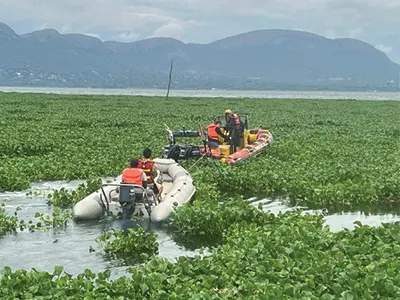
As Hartbeespoort Dam continues its battle against invasive water hyacinth, an important question arises: How do other parts of the world deal with this fast-growing aquatic plant, and are there lessons South Africa can learn from their experience?
Hartbeespoort is renowned for its magnificent dam, breathtaking scenery and rich history. But beyond the shimmering waters of Hartbeespoort Dam lies an extraordinary geological story written in stone over billions of years.
The ongoing discharge of untreated sewage into rivers feeding Hartbeespoort Dam has once again placed the spotlight on South Africa's deteriorating wastewater infrastructure, with Deputy Minister of Water and Sanitation, Dr Jack Bloom, calling for stronger action against pollution and the rehabilitation of failing sewage treatment facilities.
Millions of tiny insects are fighting one of Hartbeespoort Dam’s biggest environmental problems — one hyacinth plant at a time
For residents and visitors around Hartbeespoort Dam, the sight has [...]
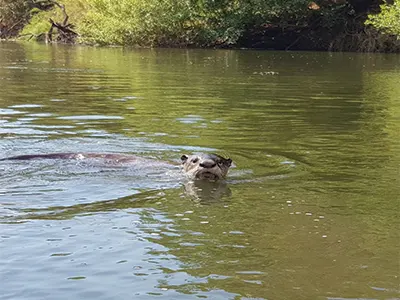
What happened to the otters? That is the question that the Owl Rescue Centre wants to answer with a research-driven project.
Well-known local resident Werner Nagel witnessed an amazing incident during a recent drive in a game reserve when birds (not of the same feathers) banded together to chase off a puff adder to protect their baby birds.
A group effort by the Serondela pride in Botswana proved too much for an exhausted giraffe.
In an attempt to reintroduce the Egyptian vulture to South Africa, two of these birds will soon be homed in Hartbeespoort.
Hya Matla, the company contracted to remove hyacinth from the Hartbeespoort Dam, and Magalies Water handed out over 50 tons of organic compost made from hyacinth removed from the dam to local emerging farmers in Madibeng.

All about Hartbeespoort
© 2000 - 2026 • Kormorant