How Europe and North America fight water hyacinth – and what Hartbeespoort can learn
From biological control and mechanical harvesting to strict environmental regulations, countries across the Atlantic have developed different strategies to combat one of the world’s most troublesome aquatic weeds.

CBC in the process of releasing bugs on the hyacinth.
As Hartbeespoort Dam continues its battle against invasive water hyacinth, an important question arises: How do other parts of the world deal with this fast-growing aquatic plant, and are there lessons South Africa can learn from their experience?
Water hyacinth (Pontederia crassipes, formerly Eichhornia crassipes) is widely regarded as one of the world’s most invasive aquatic plants. Originally from South America, it has spread to waterways across Africa, Asia, Europe and North America.
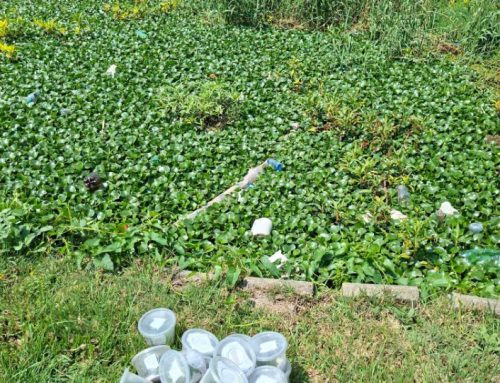
Under favourable conditions, the plant reproduces rapidly, forming thick floating mats that block sunlight, reduce oxygen levels, interfere with boating and fishing, and disrupt aquatic ecosystems.
Hartbeespoort residents know these problems all too well.
However, the approaches adopted in Europe and North America reveal something important: There is no single solution to water hyacinth. Successful management requires a combination of prevention, biological control, physical removal, monitoring and, crucially, reducing the nutrients that encourage excessive plant growth.
Europe: Prevention is better than cure
Europe’s approach to water hyacinth differs considerably from that of South Africa.
Because much of Europe experiences colder winters, water hyacinth cannot flourish everywhere as easily as it does in warmer regions. However, parts of southern Europe, particularly Spain and Portugal, have experienced serious infestations.
The European Union has adopted strict legislation to prevent the introduction and spread of invasive aquatic plants.
Water hyacinth was included on the EU’s list of invasive alien species of Union concern in 2016.
Under these regulations, the plant is subject to restrictions on importing, selling, cultivating, keeping and releasing it into the environment.
European authorities emphasise three principles: preventing new introductions, eliminating infestations while they are still small, and managing established populations.
The objective is to prevent a relatively inexpensive problem from becoming a permanent and costly environmental disaster. Environment
Spain: A costly battle on the Guadiana River
One of Europe’s most significant water hyacinth problems has occurred along Spain’s Guadiana River, which flows towards Portugal.
Here, water hyacinth has formed extensive floating mats, threatening aquatic ecosystems, irrigation infrastructure and recreational activities.
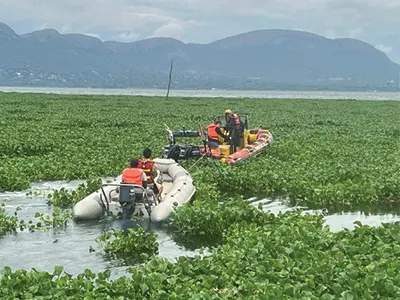
Spanish authorities have relied heavily on mechanical removal.
Specialised machinery, floating equipment and workers remove large quantities of plants from the river.
Containment barriers are also used in certain locations to concentrate floating vegetation and prevent it from spreading downstream.
The problem has required cooperation between Spanish and Portuguese authorities because invasive plants do not recognise international borders.
Despite extensive removal operations and considerable expenditure, European authorities acknowledged that the plant had not been eradicated from the affected river system.
The lesson is that mechanical removal can restore access and reduce infestations, but it does not necessarily prevent the plants from returning. easin.jrc.ec.europa.eu
For Hartbeespoort, this is particularly relevant.
Removing thousands of tonnes of hyacinth from the dam may produce immediate visible improvements, but unless regrowth is controlled, the problem can return.
North America: Combining insects, chemicals and harvesting
In the United States, water hyacinth has been a major environmental problem for more than a century.
Warm southern states such as Florida, Louisiana and Texas provide favourable conditions for the plant.
California has also experienced extensive infestations, particularly in the Sacramento–San Joaquin Delta.
Unlike much of Europe, American authorities have developed large-scale programmes that combine biological control, chemical treatment and mechanical harvesting.
Florida: More than 50 years of biological control
Florida has one of the longest histories of water hyacinth management in the world.
The plant became established during the late 1800s and eventually spread across vast areas of the state’s waterways.
By the 1970s, water hyacinth had become a major obstacle to navigation, recreation and water management.
American researchers began investigating insects that naturally feed on water hyacinth in its South American homeland.
Two species of weevil became particularly important:
- Neochetina eichhorniae, released in Florida in 1972.
- Neochetina bruchi, released in 1974.
These insects feed on the plant’s leaves and internal tissues, weakening its growth and reproductive ability.
A water hyacinth moth, Niphograpta albiguttalis, was also introduced in 1977.
The insects have since become established in many American waterways where water hyacinth occurs. saj.usace.army.mil
However, the insects have not eliminated the plant.
Instead, Florida uses biological control as part of a broader management programme.
Where rapid removal is necessary, authorities may apply approved aquatic herbicides.
Research by the University of Florida has shown that biological control insects can complement herbicide treatments, potentially allowing lower chemical application rates while maintaining effective weed suppression.
This approach can reduce costs and chemical use.
Florida’s experience demonstrates that biological control should not necessarily be regarded as a replacement for other management methods, but as a tool that can make them more effective. Ask IFAS
California: Fighting hyacinth with machines and science
California faces a challenge that Hartbeespoort residents may recognise.
In the Sacramento–San Joaquin Delta, water hyacinth can form enormous floating mats that obstruct waterways, interfere with boats and threaten native aquatic vegetation.
The state’s Division of Boating and Waterways operates an integrated aquatic vegetation control programme.
Mechanical harvesting forms part of this programme.
Specialised vessels equipped with cutting and conveyor systems collect floating plants and transfer them onto the machines for removal.
Mechanical harvesting is particularly useful where dense vegetation blocks waterways or where chemical treatment is less suitable.
California has also used herbicides and investigated biological control agents.
In March 2026, California State Parks announced another annual programme of aquatic invasive plant treatments, including water hyacinth.
The programme illustrates how established infestations require repeated intervention rather than a once-off clean-up. CA State Parks
A familiar insect: The water hyacinth planthopper
One particularly interesting connection between California and Hartbeespoort is the use of the water hyacinth planthopper, Megamelus scutellaris.
This small insect feeds on water hyacinth and can weaken the plant by extracting sap.
Researchers in California have investigated releasing planthoppers alongside other biological control insects.
The intention is to develop combinations of natural enemies that suppress hyacinth growth more effectively.
However, biological control results can vary significantly according to local environmental conditions.
An insect that performs well in one region may struggle to establish itself or reproduce successfully in another.
California’s research programme therefore includes monitoring whether released insects establish and whether they can be combined effectively with other control methods. UC Agriculture and Natural Resources
This research is particularly relevant to Hartbeespoort, where biological control using insects, including planthoppers, forms part of efforts to manage water hyacinth.
The American experience reinforces the importance of monitoring insect populations and measuring their actual impact on the weed.
What about chemical control?
Chemical treatment is one of the more controversial aspects of water hyacinth management.
In parts of the United States, approved aquatic herbicides are used to kill floating vegetation.
These treatments can provide relatively rapid results, especially when infestations threaten critical infrastructure or navigation.
However, herbicides must be selected and applied carefully.
Potential concerns include damage to non-target vegetation, restrictions on water use and oxygen depletion when large quantities of dead plants decompose.
For this reason, chemical treatment requires environmental assessment, appropriate authorisation and monitoring.
The American approach does not demonstrate that chemicals are always the best solution.
Rather, it shows that different situations may require different interventions.
In South Africa, any proposed herbicide treatment must comply with applicable legislation and be evaluated against the ecological conditions of the particular waterbody.
The overlooked problem: Nutrients in the water
There is another important lesson for Hartbeespoort.
Water hyacinth thrives in nutrient-rich water, particularly where nitrogen and phosphorus are readily available.
These nutrients can enter waterways through sewage discharges, agricultural runoff and other sources of pollution.
Consequently, removing the floating plants does not necessarily address the environmental conditions that encourage them to grow.
A dam may appear clean immediately after harvesting, while the nutrients supporting the next infestation remain in the water.
This is especially important for Hartbeespoort Dam, which receives water from a heavily developed catchment.
Reducing excessive nutrient inputs should therefore form part of any long-term water hyacinth management strategy.
There is also an important distinction between controlling hyacinth and restoring water quality.
Biological control insects may reduce plant growth, but they do not repair sewage infrastructure or remove the underlying sources of nutrient pollution.
Similarly, mechanical harvesting can physically remove nutrients contained in harvested vegetation, but it cannot compensate indefinitely for continuing pollution.
A sustainable solution requires both aquatic weed management and improvements in catchment water quality.
What can Hartbeespoort learn from overseas?
The experiences of Europe and North America offer several practical lessons.
1. Prevention and early intervention save money
Europe’s strict approach to invasive species highlights the importance of preventing new infestations and controlling small outbreaks before they spread.
2. Biological control is a long-term investment
Florida’s experience demonstrates that insects can play a valuable role in suppressing water hyacinth, even when they do not eradicate it.
3. Mechanical harvesting provides immediate relief
California and Spain have demonstrated the value of removing floating vegetation to restore access to waterways and protect infrastructure.
However, harvesting requires ongoing resources, suitable equipment and responsible disposal of the collected plants.
4. Different methods must work together
American research increasingly supports integrated management, combining biological control, mechanical removal and carefully selected chemical treatments where appropriate.
South African water hyacinth management guidelines also recognise the value of integrated control. invasives.org.za
5. Continuous monitoring is essential
Authorities need reliable information about infestation levels, plant growth, biological control effectiveness and changing environmental conditions.
This allows management strategies to be adjusted before problems become overwhelming.
6. Water quality cannot be ignored
Controlling floating vegetation without addressing nutrient pollution risks creating a cycle of repeated infestations.
Could Hartbeespoort adopt the American model?
In many respects, Hartbeespoort already uses elements of the approaches developed overseas.
Biological control insects, mechanical removal and environmental monitoring are all familiar components of local hyacinth management.
The important question is whether these interventions are sufficiently coordinated and supported by long-term funding, scientific monitoring and effective pollution control.
Florida’s experience suggests that biological control can provide continuing suppression of the weed.
California demonstrates that harvesting and other direct interventions may still be necessary where dense vegetation threatens recreational and economic activities.
Europe shows that regulation, early detection and cooperation between authorities are essential.
But there is an important difference.
Hartbeespoort is not simply a river system where floating vegetation can be intercepted at selected locations.
It is a large reservoir receiving water from a catchment with significant pollution pressures.
Any successful strategy must therefore consider the dam itself, the rivers feeding it and the broader catchment.
The real lesson: Management, not miracles
Perhaps the most important lesson from Europe and North America is that even wealthy countries with advanced technology, substantial research programmes and specialised equipment have struggled to eliminate established water hyacinth infestations.
Florida has been fighting the plant for more than a century.
California continues to invest in annual control programmes.
Spain has spent years attempting to contain infestations in the Guadiana River.
None offers a simple, permanent solution that can be transferred directly to Hartbeespoort.
What these international experiences do demonstrate is the value of a consistent, scientifically informed approach.
For Hartbeespoort, this means combining biological control with targeted mechanical removal, monitoring the results and reducing the nutrients entering the dam.
It also means recognising that success should not be measured only by how much hyacinth is visible on a particular day.
A more meaningful measure would be whether infestations become less severe over time, recreational activities remain possible, aquatic ecosystems recover and the dam’s water quality improves.
The ultimate objective should not merely be a Hartbeespoort Dam without water hyacinth, but a healthier dam in which invasive plants can no longer dominate the ecosystem.
And if there is one lesson Hartbeespoort can take from decades of international experience, it is this:
Removing the hyacinth is only part of the battle. Preventing the conditions that allow it to flourish is just as important.