Long before Hartbeespoort Dam was built, the Magaliesberg was part of a turbulent chapter in Southern African history. One of its most powerful figures was Mzilikazi, founder of the Ndebele kingdom, whose name survives in the mountain pass known today as Silkaatsnek.
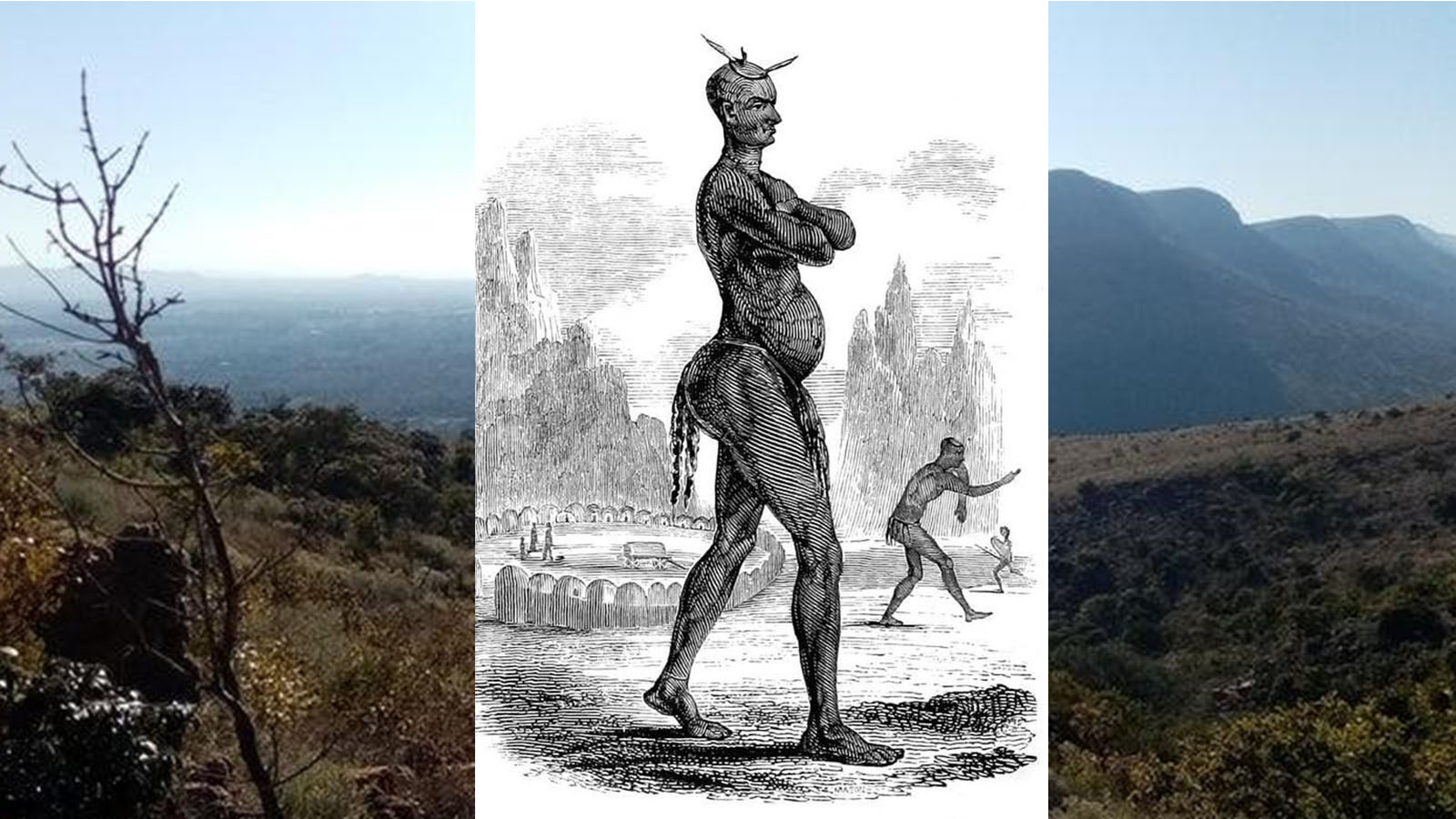
o thousands of motorists travelling through the Magaliesberg, Silkaatsnek is simply a familiar mountain pass near Hartbeespoort. Yet its name carries the memory of one of the most remarkable African leaders of the nineteenth century.
King Mzilikazi, whose name was rendered in various forms by European settlers, including Silkaats, founded a powerful Ndebele kingdom that stretched across large parts of the interior of Southern Africa.
His rise to power, his conflicts with neighbouring communities and the Voortrekkers, and his eventual migration north into present-day Zimbabwe helped shape the history of the region surrounding Hartbeespoort.
From Shaka’s warrior to an independent king
Mzilikazi was born around 1790 into the Khumalo clan in what is today KwaZulu-Natal. His father, Mashobane (also recorded as Matshobana), was a prominent Khumalo chief.
As a young leader, Mzilikazi became associated with the powerful Zulu king Shaka, whose military campaigns were transforming the political landscape of southeastern Africa.
Mzilikazi rose to prominence as a military commander, but his relationship with Shaka eventually deteriorated.
According to a widely recorded account, the dispute arose when Mzilikazi retained cattle captured during a military expedition rather than surrendering them to Shaka.
Facing possible retaliation, Mzilikazi broke away from the Zulu kingdom during the early 1820s, taking a relatively small group of followers with him.
It was the beginning of an extraordinary migration that would eventually take his people more than a thousand kilometres northwards.
What started as a small breakaway group developed into one of the most powerful kingdoms in the interior of Southern Africa.
Mzilikazi arrives in the Magaliesberg
By approximately 1827, Mzilikazi and his followers had reached the Magaliesberg region.
At the time, the area around present-day Hartbeespoort, Pretoria and Rustenburg was already inhabited by established Sotho-Tswana communities, including the Bakwena, Bakgatla and Bafokeng.
These communities had their own settlements, leaders, cattle herds and agricultural systems long before Mzilikazi arrived.
His arrival dramatically changed the balance of power.
The Ndebele forces were organised into disciplined military regiments, and Mzilikazi used a combination of military conquest, political alliances and the incorporation of other communities to expand his kingdom.
Some communities were defeated and displaced, while others became part of the growing Ndebele state.
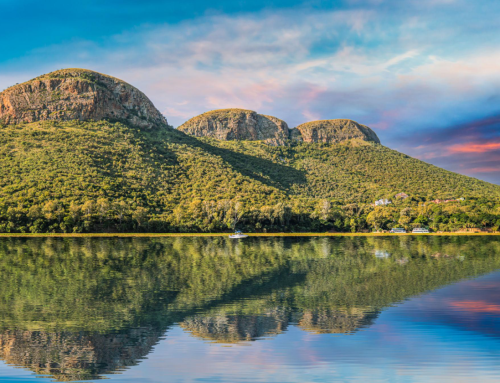
The Magaliesberg, with its natural defensive positions, fertile valleys, water sources and strategic mountain passes, became an important centre of his power.
For several years, Mzilikazi dominated much of the region that would later become northern Gauteng and parts of North West Province.
Why Silkaatsnek bears his name
The connection between Mzilikazi and Hartbeespoort is preserved in the name Silkaatsnek.
The name Silkaats is a historical rendering of Mzilikazi’s name, while nek is the Afrikaans word for a mountain pass or saddle.
Silkaatsnek can therefore be understood as the mountain pass associated with Mzilikazi.
The pass lies in the Magaliesberg near Hartbeespoort, in an area where his forces operated during the late 1820s and early 1830s.
Historical accounts describe Mzilikazi’s campaigns against local Tswana communities in the vicinity of Silkaatsnek, reinforcing the association between the king and the mountain pass.
The name is a reminder that the region’s history extends far beyond the arrival of the Voortrekkers or the construction of Hartbeespoort Dam.
Long before the first modern roads were built through these mountains, their valleys and passes formed part of a powerful African kingdom.
A royal stronghold near Hartbeespoort
One of the most fascinating aspects of Mzilikazi’s history is that he established important military settlements in the region.
Among these was Dinaneni, described in historical accounts as lying north of present-day Hartbeespoort Dam.
Other important centres included Kungwini, near the Wonderboom and Apies River area, and Hlahlandlela, associated with the western Magaliesberg and Rustenburg region.
These settlements were more than ordinary villages.
They functioned as military headquarters, centres of administration and places where cattle, food supplies and tribute were controlled.
Mzilikazi organised his growing population into regimental settlements, maintaining a powerful military structure while incorporating people from different linguistic and cultural backgrounds.
The kingdom that emerged was not made up exclusively of people who had accompanied him from KwaZulu-Natal.
It included many Sotho-Tswana people who had been absorbed into the Ndebele political system, sometimes voluntarily but often through conquest.
This ability to unite diverse communities under a central authority was one of the foundations of Mzilikazi’s power.
A feared but remarkable leader
Mzilikazi was both admired and feared.
His military campaigns brought devastation to several communities across the interior, with cattle raids, forced displacement and the destruction of settlements becoming part of the turbulent period often called the Mfecane or Difaqane.
However, historians increasingly recognise that these upheavals cannot be explained by the actions of a single leader.
Competition over land, cattle and trade, changing political alliances, drought, raiding and expanding colonial frontier pressures all contributed to the instability.
Mzilikazi was an important participant in these events, but he was also a skilled political organiser.
He established a centralised kingdom, maintained military discipline and developed diplomatic relationships with outsiders.
One of his most unusual friendships was with the Scottish missionary Robert Moffat, who visited him in 1830.
Moffat described a king who could be dignified, charming and welcoming, despite his reputation for ruthless military rule.
Their relationship continued even after Mzilikazi eventually left the Magaliesberg region.
The arrival of the Voortrekkers
During the 1830s, Mzilikazi’s kingdom faced increasing pressure from neighbouring African groups, raiders and eventually the Voortrekkers moving north of the Vaal River.
Conflict intensified in 1836.
Mzilikazi’s forces attacked Voortrekker parties, leading to a series of confrontations, including the Battle of Vegkop.
In January 1837, a combined force involving Voortrekkers and African allies attacked the Ndebele stronghold at Mosega, west of the Magaliesberg.
Although Mzilikazi’s kingdom survived the attack, it suffered a significant setback.
Later that year, another major campaign against the Ndebele settlements around eGabeni, also known as Kapain, further weakened his position.
Faced with continued military pressure, Mzilikazi made the momentous decision to lead his people northwards across the Limpopo River.
His departure marked the end of Ndebele political dominance over much of the Magaliesberg region.
The founding of a kingdom in Zimbabwe
Mzilikazi’s migration did not mark the end of his ambitions.
After crossing the Limpopo, his followers eventually settled in what is today southwestern Zimbabwe.
There he established the kingdom that became known as Matabeleland, incorporating existing communities, including Kalanga and other peoples, into a new political order.
The Ndebele kingdom developed into a powerful state with its own military, political and cultural traditions.
Mzilikazi established royal centres in the region associated with present-day Bulawayo and the Matobo Hills.
He ruled until his death on 9 September 1868.
His son Lobengula later succeeded him as king and became an important figure in Zimbabwe’s history during the period of British colonial expansion.
The Northern Ndebele people of Zimbabwe continue to regard Mzilikazi as a foundational figure in their history.
It is important to distinguish this kingdom from the older Southern Ndebele communities of South Africa, whose history predates Mzilikazi’s rise to power.
Silkaatsnek’s second place in history
Interestingly, Silkaatsnek would become famous again more than six decades after Mzilikazi’s death.
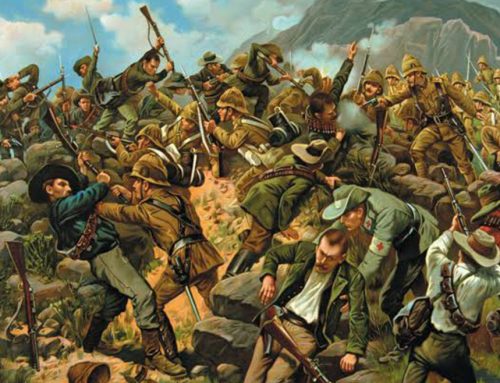
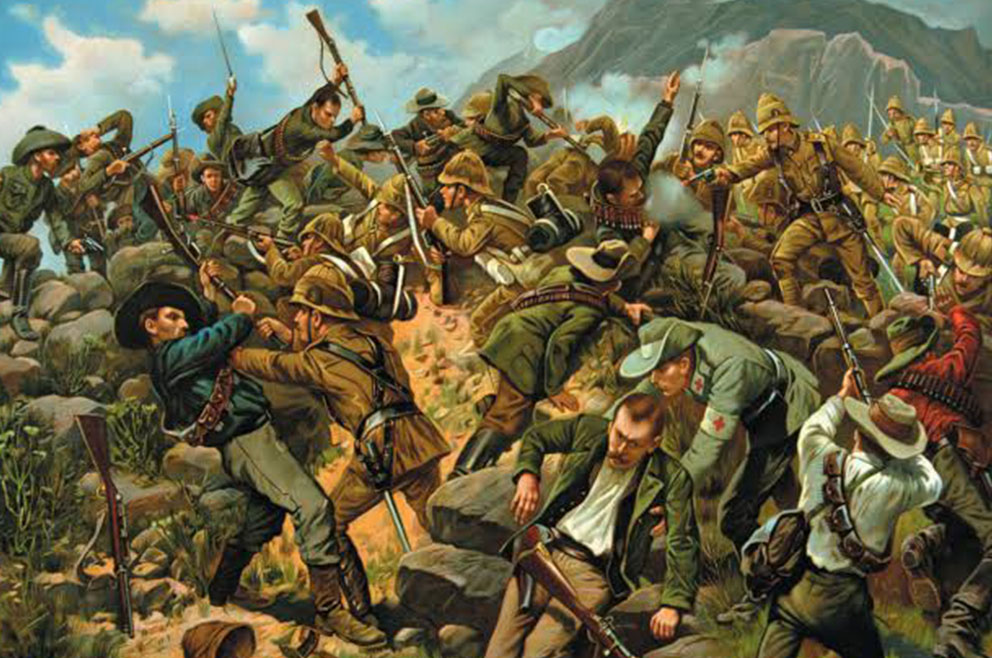
On 11 July 1900, during the Anglo-Boer War, Boer forces under General Koos de la Rey attacked British positions guarding the pass.
The Battle of Silkaatsnek resulted in a significant Boer victory and became one of the notable engagements of the guerrilla phase of the war.
Today, the pass is often remembered primarily for that battle.
Yet the name Silkaatsnek preserves an earlier chapter of history, when Mzilikazi and his Ndebele warriors were a dominant force in the Magaliesberg.
The two histories are separated by more than 60 years, but they share the same rugged landscape.
A king whose legacy remains in the mountains
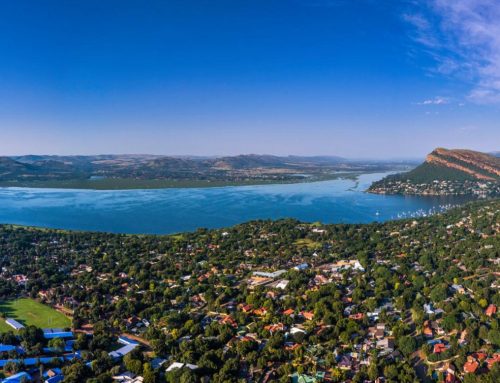
For modern residents of Hartbeespoort, Mzilikazi’s story offers a different perspective on the familiar mountains surrounding the town.
The Magaliesberg was not an empty wilderness waiting to be settled.
It was a landscape inhabited and contested by African communities for generations, and it became the centre of a powerful kingdom during one of Southern Africa’s most dramatic periods of political change.
Mzilikazi’s influence stretched far beyond the mountains.
He reshaped the political landscape of the interior, established a kingdom that would endure in Zimbabwe and left a legacy that remains significant almost two centuries later.
And here in Hartbeespoort, his name survives in one of the region’s best-known mountain passes.
The next time you travel through Silkaatsnek, remember that its name recalls not merely a mountain crossing, but a powerful African king whose story connects Hartbeespoort to the history of an entire region.
Historical note: The precise chronology of Mzilikazi’s movements and the locations of some royal settlements differ between historical accounts. The association of Silkaatsnek with Mzilikazi is well established, although the exact circumstances in which the pass acquired its name are less clearly documented.