Few people travelling along the R104 between Hartbeespoort and Pretoria realise that the name Pelindaba has a fascinating history dating back to a failed township development, a frustrated farm worker and, eventually, South Africa’s secret nuclear programme.
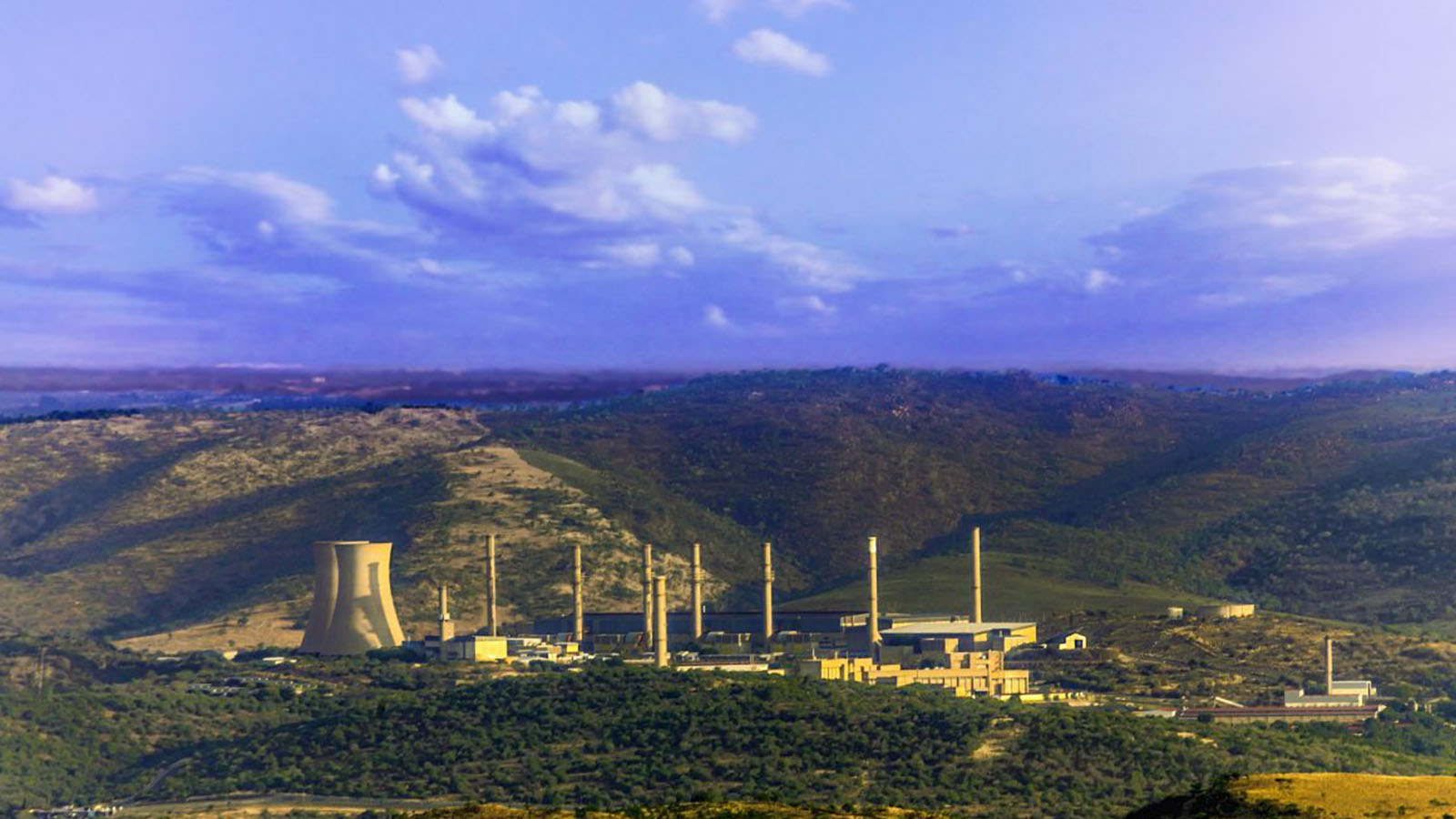
Today, Pelindaba is internationally recognised as the home of South Africa’s nuclear research facilities. But the name existed long before the first nuclear scientists arrived in the area.
Its origin is rooted in the history of the farms surrounding Hartbeespoort Dam.
What does Pelindaba mean?
The name Pelindaba is derived from the isiZulu expression phelile indaba, which can be translated as “the discussion is finished”, “the matter is settled” or simply “end of discussion”.
According to historical accounts, the name originated when plans to establish a township on farmland near Hartbeespoort were abandoned.
An elderly farm worker, apparently tired of hearing about the proposed development, reportedly exclaimed:
“Phelile indaba!”
In other words, there was nothing more to discuss.
The expression eventually became the name Pelindaba, which would later acquire an entirely different significance in South African history.
A farm near Hartbeespoort Dam
The story begins on the farm Welgegund, which belonged to the Pretorius family.
According to South African History Online, the farm was originally awarded by the Zuid-Afrikaansche Republiek (ZAR) to Martiens Pretorius, known as Swart Martiens, a nephew of President M.W. Pretorius, after whom Pretoria was named.
The property subsequently passed through the family and was inherited by Hannie Preller, a granddaughter of Swart Martiens.
In 1920, a portion of Welgegund was expropriated for the construction of Hartbeespoort Dam and a proposed township development.
The township remained on the drawing board for years, but the development was eventually abandoned.
It was reportedly this decision that prompted the elderly farm worker’s memorable remark, giving the area its unusual name.
Although the story has been preserved in heritage records, the identity of the worker and the exact date of the remark are not established.
The connection with Gustav Preller
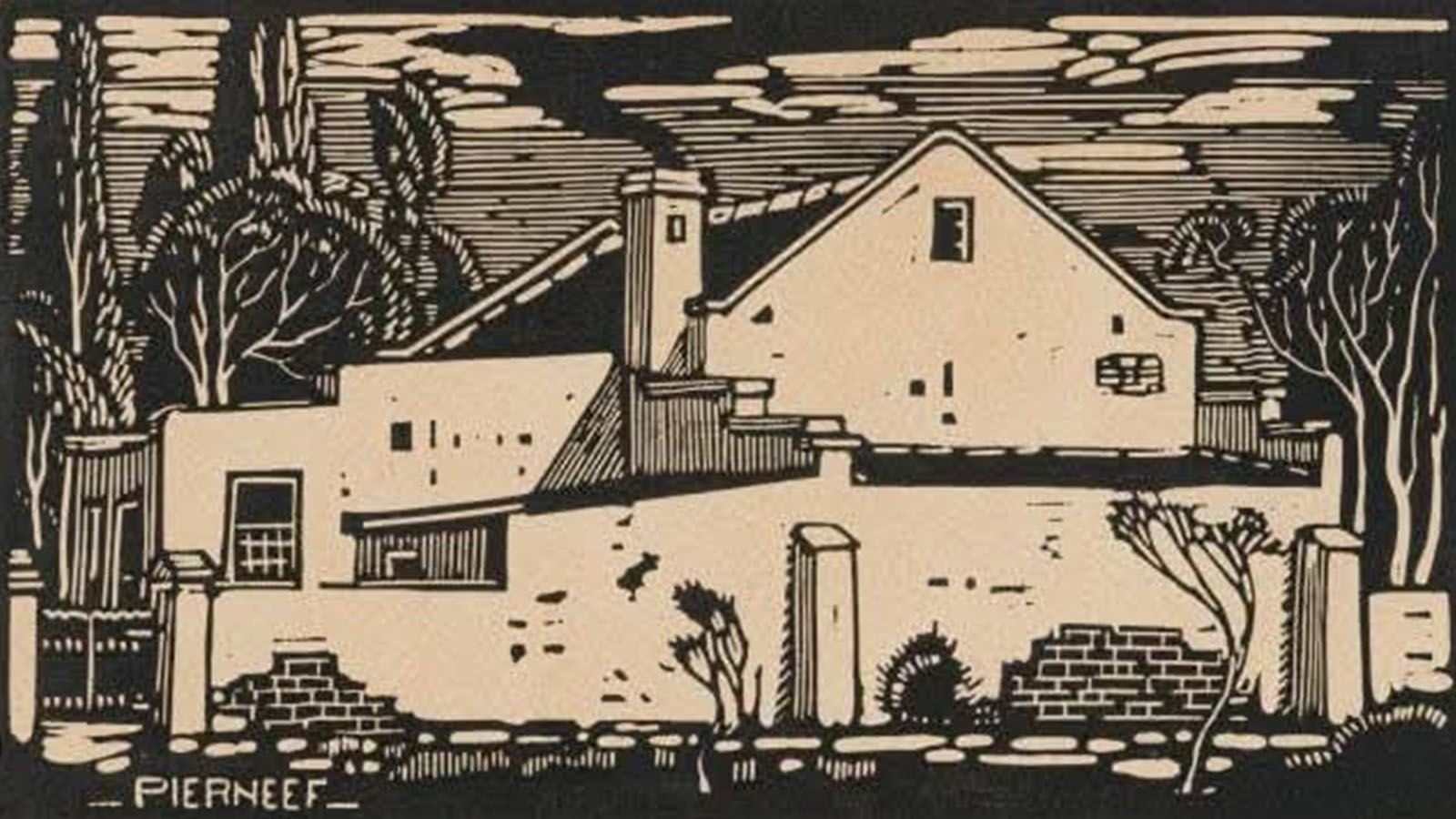
Preller house at Pelindaba (Pierneef)
Pelindaba also has an important connection with one of South Africa’s best-known historians and writers, Gustav Preller.
Preller and his wife were associated with the historic farm property, where a group of traditional rondavels became part of the area’s cultural heritage.
The buildings, known as the Preller-Rondawels, were declared a National Monument on 2 March 1973.
Preller was an influential figure in Afrikaans historical writing, particularly for his work documenting the history of the Voortrekkers.
The area was also associated with the celebrated Afrikaans poet and naturalist Eugène Marais.
Long before Pelindaba became synonymous with nuclear technology, the surrounding countryside therefore had a connection with South Africa’s literary and historical heritage.
From a quiet farm to South Africa’s nuclear headquarters
During the late 1950s, the South African government selected farmland west of Pretoria for the development of a national nuclear research centre.
The facility became known as Pelindaba, adopting the name associated with the earlier township proposal.
Construction began in the early 1960s, and the research centre’s first buildings were occupied in 1963.
One of its most important developments was the SAFARI-1 nuclear research reactor, which was commissioned on 18 March 1965.
The reactor became an important part of South Africa’s nuclear research programme, supporting scientific research and the production of radioisotopes used in medicine and industry.
However, Pelindaba would also become closely associated with a far more controversial chapter of the country’s history.
Valindaba: The place where nobody talks
Perhaps the most intriguing twist in the story is the name Valindaba.
During the apartheid era, South Africa developed a secret uranium enrichment programme at a facility adjoining Pelindaba.
The enrichment plant became known as Valindaba, a name interpreted as meaning that the subject was not to be discussed.
While Pelindaba suggested that the discussion had ended, Valindaba carried an even stronger implication of secrecy.
The facility, also known as the Y-Plant, formed part of South Africa’s nuclear programme during the period when the country secretly developed nuclear weapons.
By the early 1990s, South Africa had dismantled its nuclear weapons programme and joined the international Nuclear Non-Proliferation Treaty.
The names Pelindaba and Valindaba thus became closely associated with one of the most secretive periods in South African technological and military history.
A name that became internationally famous
The name Pelindaba eventually gained significance far beyond the Hartbeespoort area.
On 11 April 1996, African countries signed the African Nuclear-Weapon-Free Zone Treaty in Cairo, Egypt.
The agreement became widely known as the Treaty of Pelindaba.
Its purpose was to establish Africa as a nuclear-weapon-free zone and prevent the development, acquisition and stationing of nuclear explosive devices on the continent.
The choice of name was highly symbolic.
A place once associated with South Africa’s secret nuclear weapons programme had become the namesake of an international agreement intended to keep an entire continent free of nuclear weapons.
A remarkable piece of Hartbeespoort history
For residents of Hartbeespoort, Pelindaba is more than the name of a nuclear research centre or a familiar landmark along the road to Pretoria.
It is a reminder of the area’s agricultural beginnings, the development of Hartbeespoort Dam, the influence of early settlers and writers, and the extraordinary scientific and political history that followed.
What reportedly began as a farm worker’s frustrated remark about an abandoned township development eventually became a name recognised around the world.
There is also a certain irony in the story.
A name meaning “the end of discussion” became associated with a nuclear programme surrounded by secrecy, and later with an international treaty that continues to shape discussions about nuclear disarmament.
More than a century after the early township plans, the name Pelindaba remains part of the rich and sometimes surprising history of the Hartbeespoort region.
And it all reportedly began with three simple words:
“Phelile indaba” — the discussion is over.