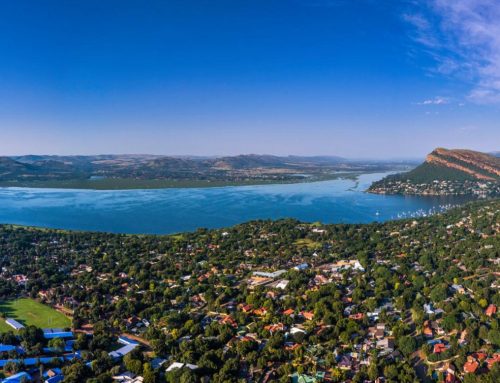
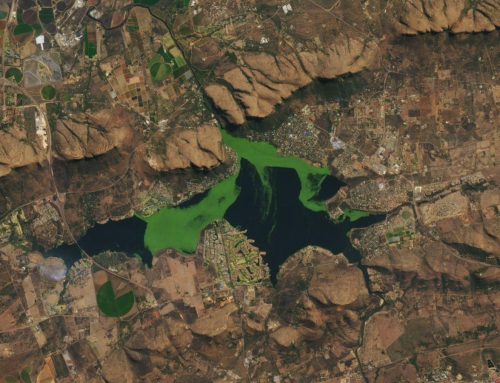
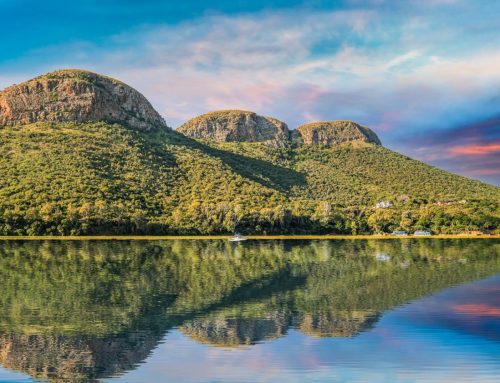
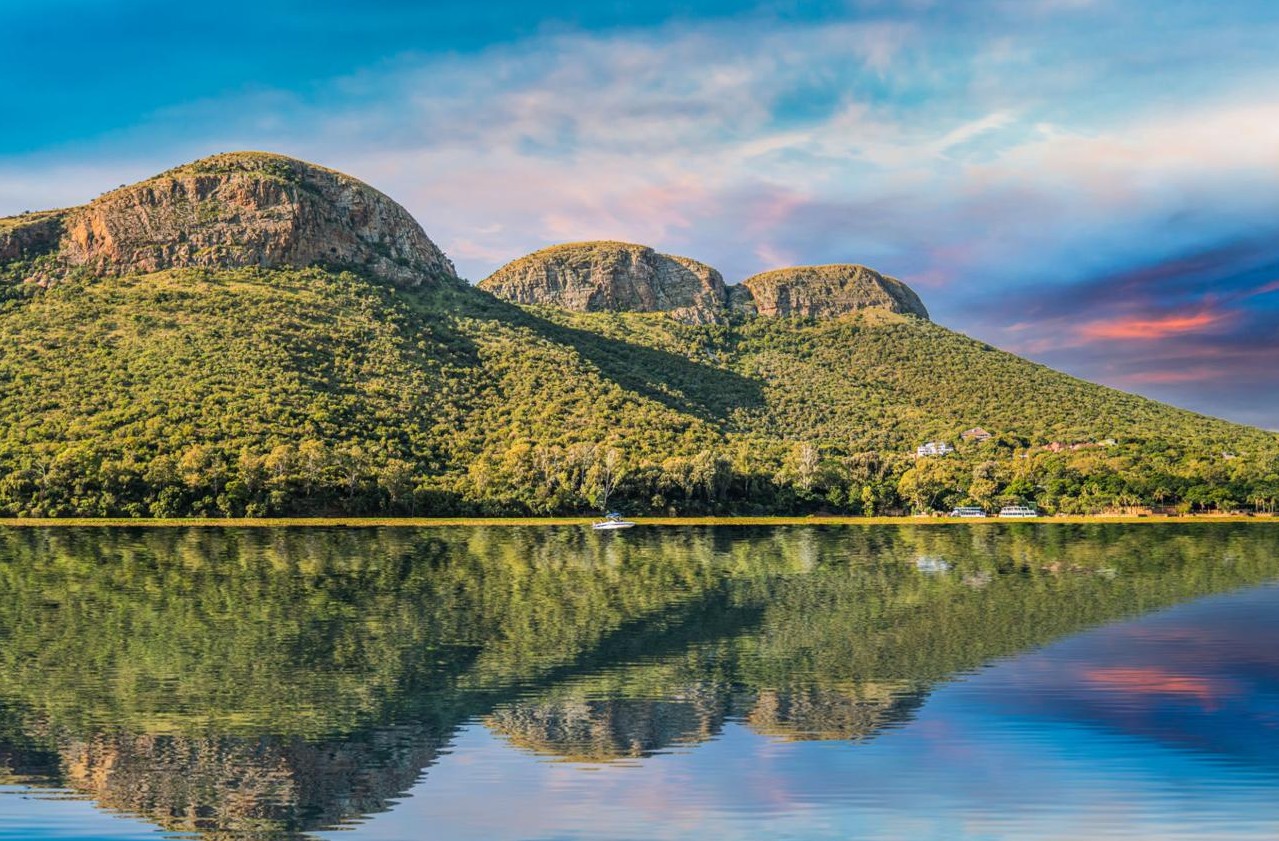
Long before Hartbeespoort Dam was built, four mountain passes played an important role in the movement of people, livestock, wagons and armies through the Magaliesberg. Silkaatsnek, Saartjiesnek, Kommandonek and Pampoennek are more than geographical landmarks — their names preserve fascinating fragments of the region’s history.
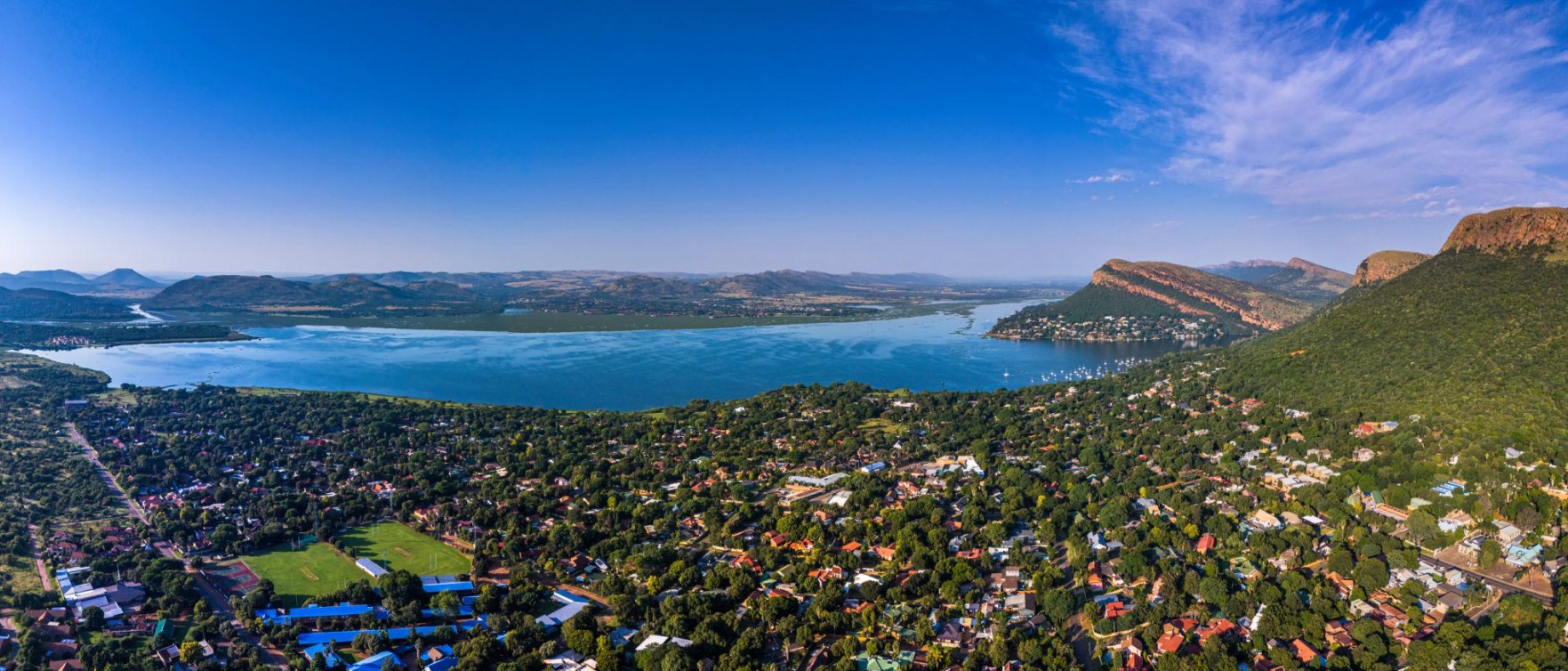
The Magaliesberg has always been both a natural barrier and a gateway. For centuries, people travelling between the valleys south of the mountains and the country to the north relied on openings in the rugged mountain range.
These openings became known as nekke — the Afrikaans word for saddles or low passages between higher sections of a mountain ridge.
Around Hartbeespoort, four names in particular have survived through generations: Zilkaatsnek (more commonly written Silkaatsnek), Saartjiesnek, Kommandonek and Pampoennek.
Some of their names have well-documented historical origins. Others are linked to local traditions, colourful characters and explanations that have become part of Hartbeespoort folklore.
1. Silkaatsnek — Named after a powerful African king
Silkaatsnek, sometimes spelled Zilkaatsnek, is situated east of Hartbeespoort Dam along the Magaliesberg.
Its name comes from Mzilikazi, the founder of the Ndebele kingdom, who established his power in the interior during the 1820s and 1830s.
Mzilikazi’s forces occupied parts of the region before the arrival of the Voortrekkers. The name Silkaats developed as a Dutch and Afrikaans adaptation of Mzilikazi.
The pass became famous during the Anglo-Boer War when Boer forces under General Koos de la Rey attacked British positions there on 11 July 1900.
The battle was a significant Boer victory and demonstrated the strategic importance of the Magaliesberg passes.
2. Saartjiesnek — A name surrounded by local legend
Saartjiesnek lies on the southern approach to Hartbeespoort, where travellers cross the mountain ridge towards the dam.
Unlike Silkaatsnek, its name has no universally accepted explanation.
One theory suggests that Saartjiesnek is an Afrikaans adaptation of Sergeant’s Nek, possibly referring to a British soldier.
A more colourful local tradition tells of Aunt Saartjie Mocke, who attempted to travel through the difficult pass in a horse-drawn cart.
According to the story, the cart broke down halfway through the pass. A local resident, Martiens Jones, had to retrieve and repair it, and the route subsequently became known as Saartjiesnek.
Kormorant previously documented both explanations in its article about the prominent granite cross on the mountain. These remain historical traditions rather than conclusively proven origins.
The four-metre granite cross at Saartjiesnek was erected by Johan Schoeman in 1955 in memory of his father, General Hendrik Schoeman.
3. Kommandonek — The historic gateway to Rustenburg
Kommandonek is situated west of Hartbeespoort Dam and has long been an important crossing through the Magaliesberg.
The name means Commando Pass in Afrikaans.
It is generally associated with the military commandos that travelled through the region during the nineteenth century, although the precise circumstances in which the name originated are not firmly established.
Long before modern roads, Kommandonek provided an important wagon route between Pretoria and Rustenburg.
President Paul Kruger frequently used the route when travelling to his farms near Rustenburg.
During the Anglo-Boer War, Kommandonek and Silkaatsnek were strategically important positions because controlling these passages helped determine movement between Pretoria and the western Transvaal.
British and Boer forces both recognised their importance, and the surrounding mountains became part of an extensive military landscape.
4. Pampoennek — The little-known pass
Pampoennek is situated a short distance west of Kommandonek.
The pass is also historically known as Klein Nek, meaning Small Pass.
Its association with Pampoennek is documented in military history research concerning British fortifications built during the Anglo-Boer War.
In October 1901, British troops occupied Klein Nek and constructed four blockhouses to protect the position.
The remains of military structures and an old mule track have been recorded in the area.
The Afrikaans word pampoen means pumpkin, but the precise reason why the pass acquired this name has not been conclusively documented. It would therefore be misleading to claim that pumpkins were cultivated there or that the name originated from a particular farmer without supporting evidence.
Pampoennek is a reminder that even relatively small mountain crossings could become strategically important during wartime.