Sewage crisis threatens Hartbeespoort Dam as Deputy Minister Jack Bloom calls for action
Millions of litres of untreated sewage continue to enter rivers feeding Hartbeespoort Dam, raising serious concerns about water quality, environmental damage and the future of one of South Africa’s most important recreational destinations.

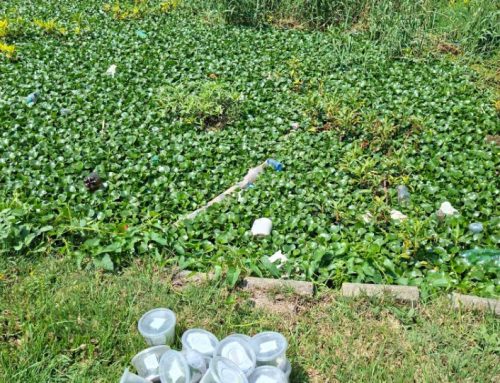
Hartbeespoort Dam continues to battle nutrient pollution and invasive aquatic plants, including water hyacinth.
The scale of the problem was highlighted during a parliamentary oversight committee meeting on 3 June 2026, when it emerged that approximately 90 million litres of untreated sewage were entering Johannesburg’s river systems every day from three malfunctioning wastewater treatment works.
Much of this pollution is carried northwards through the Jukskei River system towards Hartbeespoort Dam, contributing to the already serious environmental problems affecting the water body.
Bloom: Cleaning rivers is not enough
Speaking at the launch of the 2026 Clear Rivers Campaign in July, Bloom warned that removing rubbish and cleaning riverbanks would achieve little lasting improvement unless the underlying causes of water pollution were addressed.
He identified deteriorating wastewater infrastructure, untreated sewage discharges and illegal dumping as major contributors to the country’s river pollution crisis.
Bloom also highlighted findings from the 2025 Green Drop Report, indicating that nearly half of South Africa’s municipal wastewater treatment systems were in a critical condition.
The Department of Water and Sanitation is establishing a National Polluters Register to strengthen accountability and identify those responsible for contaminating water resources.
Although Bloom’s remarks were made during a campaign at the Apies River in Pretoria, his warning is particularly relevant to Hartbeespoort Dam, where pollution originating far upstream continues to undermine rehabilitation efforts.
Johannesburg’s sewage ends up in Hartbeespoort
Hartbeespoort Dam lies downstream of a vast catchment area that includes heavily urbanised parts of Johannesburg, Tshwane and surrounding municipalities.
The Jukskei, Hennops and other tributaries eventually feed into the Crocodile River, which supplies much of the dam’s inflow.
When sewage treatment plants malfunction or operate beyond their design capacity, untreated or inadequately treated wastewater can enter these waterways.
During the June parliamentary meeting, it was reported that six Johannesburg wastewater treatment plants no longer had sufficient capacity to handle the city’s increasing sewage volumes.
Johannesburg Water managing director Nishavheni Mukwevho reportedly assured the committee that maintenance backlogs would receive urgent attention.
Sewage feeds the hyacinth problem

Water hyacinth: Nutrient-rich water creates favourable conditions for invasive aquatic plants in Hartbeespoort Dam.
Excessive nutrients entering Hartbeespoort Dam create favourable conditions for the growth of water hyacinth and harmful algal blooms.
For Hartbeespoort residents, businesses and environmental organisations, sewage pollution is closely connected to another persistent problem: the proliferation of water hyacinth and other invasive aquatic plants.
Sewage and inadequately treated wastewater contain nutrients, particularly phosphorus and nitrogen, which encourage rapid aquatic plant and algal growth.
This process, known as eutrophication, has affected Hartbeespoort Dam for decades.
The excessive nutrient load can encourage dense vegetation, harmful cyanobacterial blooms and declining oxygen levels, placing additional pressure on aquatic ecosystems.
The Department of Water and Sanitation has previously acknowledged that rapid urbanisation and wastewater discharges from upstream municipal treatment facilities are major contributors to the dam’s nutrient enrichment.
Without significant improvements in upstream wastewater treatment, the conditions responsible for excessive aquatic plant growth are likely to persist.
Tourism and livelihoods under pressure
Hartbeespoort Dam is more than a reservoir. It is an important economic asset supporting tourism, boating, fishing, hospitality businesses, property development and recreational activities.
Continued pollution threatens the environmental quality on which many of these activities depend.
Poor water quality, unpleasant odours, floating vegetation and concerns about possible exposure to sewage contamination can discourage visitors and affect the reputation of the area.
There are also potential public health concerns. Untreated sewage can introduce disease-causing microorganisms into rivers and recreational waters, making regular monitoring and transparent publication of water-quality results essential.
The impact is therefore not limited to the dam’s ecosystem. It extends to businesses, residents and communities that depend on a healthy and accessible water resource.
Who is responsible for cleaning up the dam?
The Hartbeespoort pollution crisis highlights the challenges of managing a water system that crosses several municipal boundaries.
Although the dam is situated in North West, much of the pollution originates in Gauteng.
This means that meaningful improvements depend on cooperation between municipalities, provincial authorities, wastewater operators and the national Department of Water and Sanitation.
The department has previously appointed Magalies Water to implement remediation measures at Hartbeespoort Dam, including invasive plant management and interventions aimed at improving water quality.
However, the department has also recognised the importance of compliance monitoring and enforcement at wastewater treatment facilities within the wider catchment.
Hartbeespoort needs solutions at the source
Bloom’s call for action against sewage pollution reinforces a message that environmental organisations and concerned residents have raised for years: the restoration of Hartbeespoort Dam cannot be achieved through cleaning the dam alone.
The source of the pollution must also be addressed.
Removing water hyacinth may temporarily improve access to the dam, but it does not resolve the nutrient enrichment that encourages the plants to return.
Similarly, clearing rubbish from riverbanks does not prevent sewage from entering the water through damaged infrastructure and poorly functioning treatment facilities.
The key question now is whether the authorities responsible for wastewater treatment throughout the catchment will implement measurable improvements and provide clear timelines for reducing pollution.
For Hartbeespoort, the future of the dam depends not only on what happens along its shores, but also on decisions taken many kilometres upstream.
Until the sewage entering the river system is brought under control, the battle to restore Hartbeespoort Dam will remain an ongoing challenge.
FACT FILE | Hartbeespoort’s sewage problem
| Reported sewage discharge | Approximately 90 million litres daily into Johannesburg river systems (June 2026) |
| Main affected waterway | Jukskei–Crocodile River system |
| Environmental consequences | Nutrient enrichment, water hyacinth growth, algal blooms and water-quality deterioration |
| Responsible authorities | Relevant municipalities, wastewater operators and the Department of Water and Sanitation |
| Long-term priority | Stop untreated sewage discharges and improve upstream wastewater treatment |